
Sweden Time Zone Map
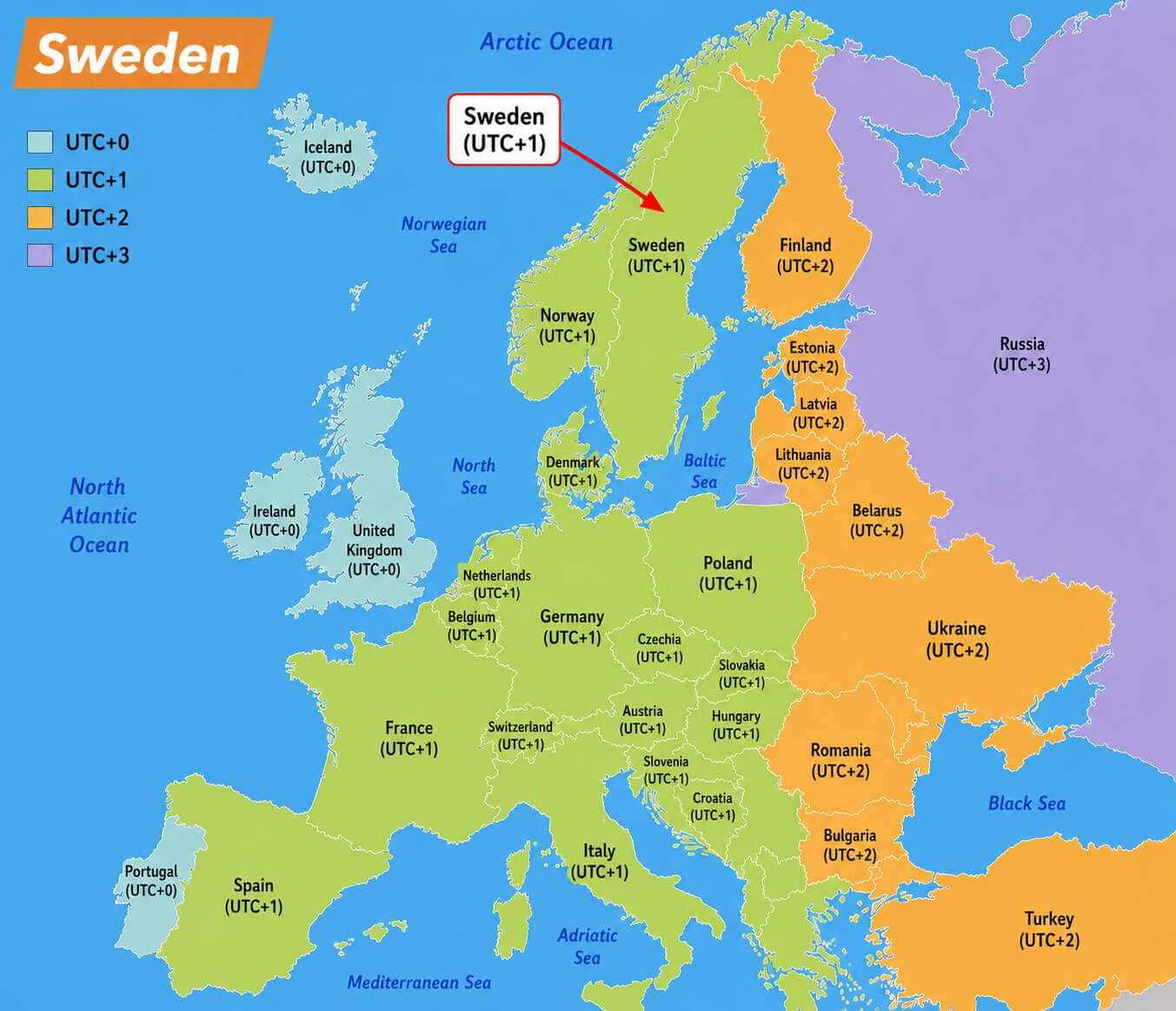
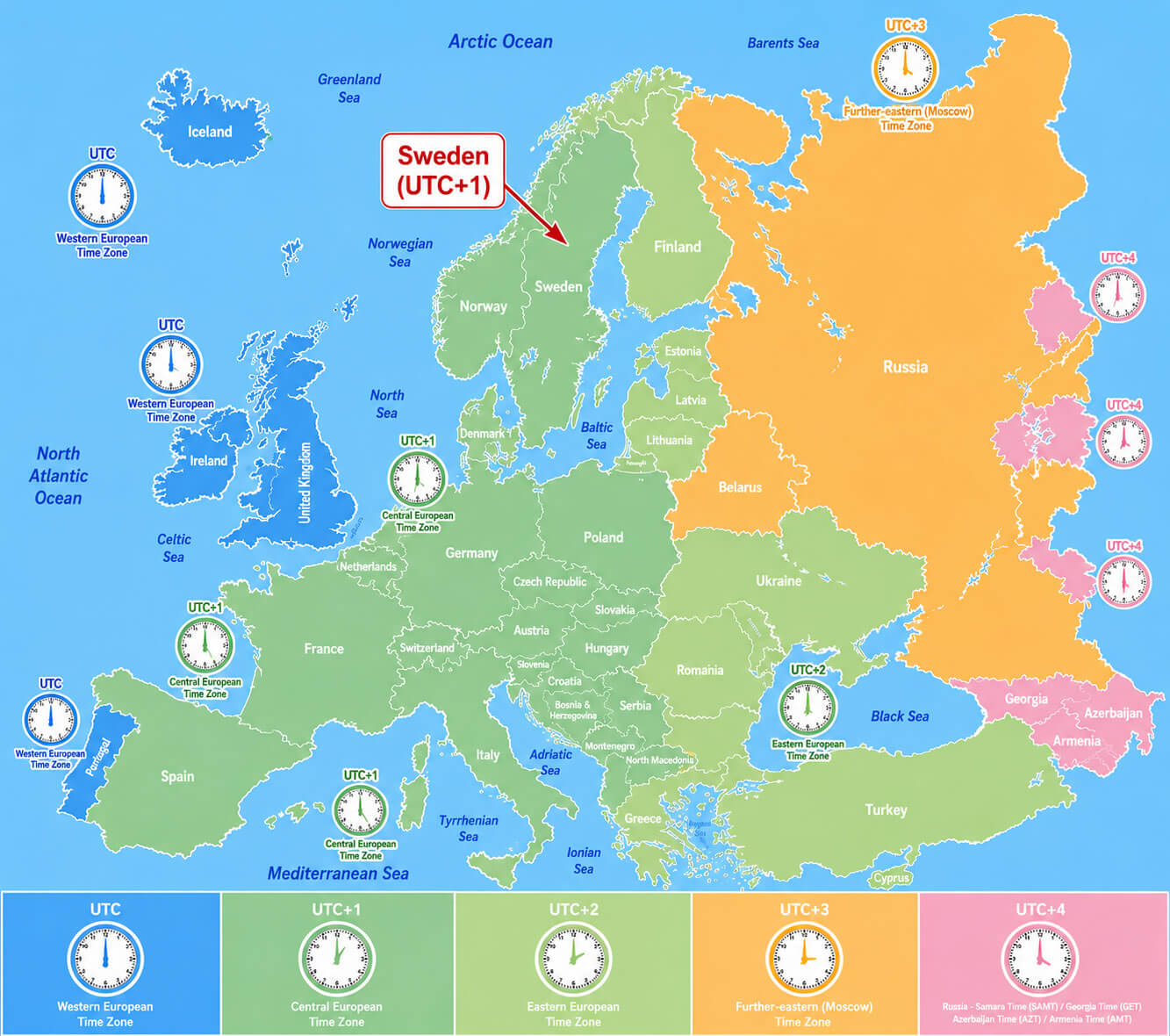
Sweden observes Central European Time (CET, UTC+1) during the standard-time period and switches to Central European Summer Time (CEST, UTC+2) while daylight saving time is in effect. In accordance with the European Union"s daylight saving schedule, clocks move forward on the last Sunday in March and return to standard time on the last Sunday in October. Sweden shares the same time zone as neighboring countries such as Norway, Denmark, Germany, Poland, and much of Central Europe, making travel, international business, and cross-border communication convenient throughout the region. This Sweden Time Zone Map provides a clear overview of the country"s UTC offset, daylight saving time changes, and its place within the Central European Time (CET/CEST) system.
Sweden time zone map
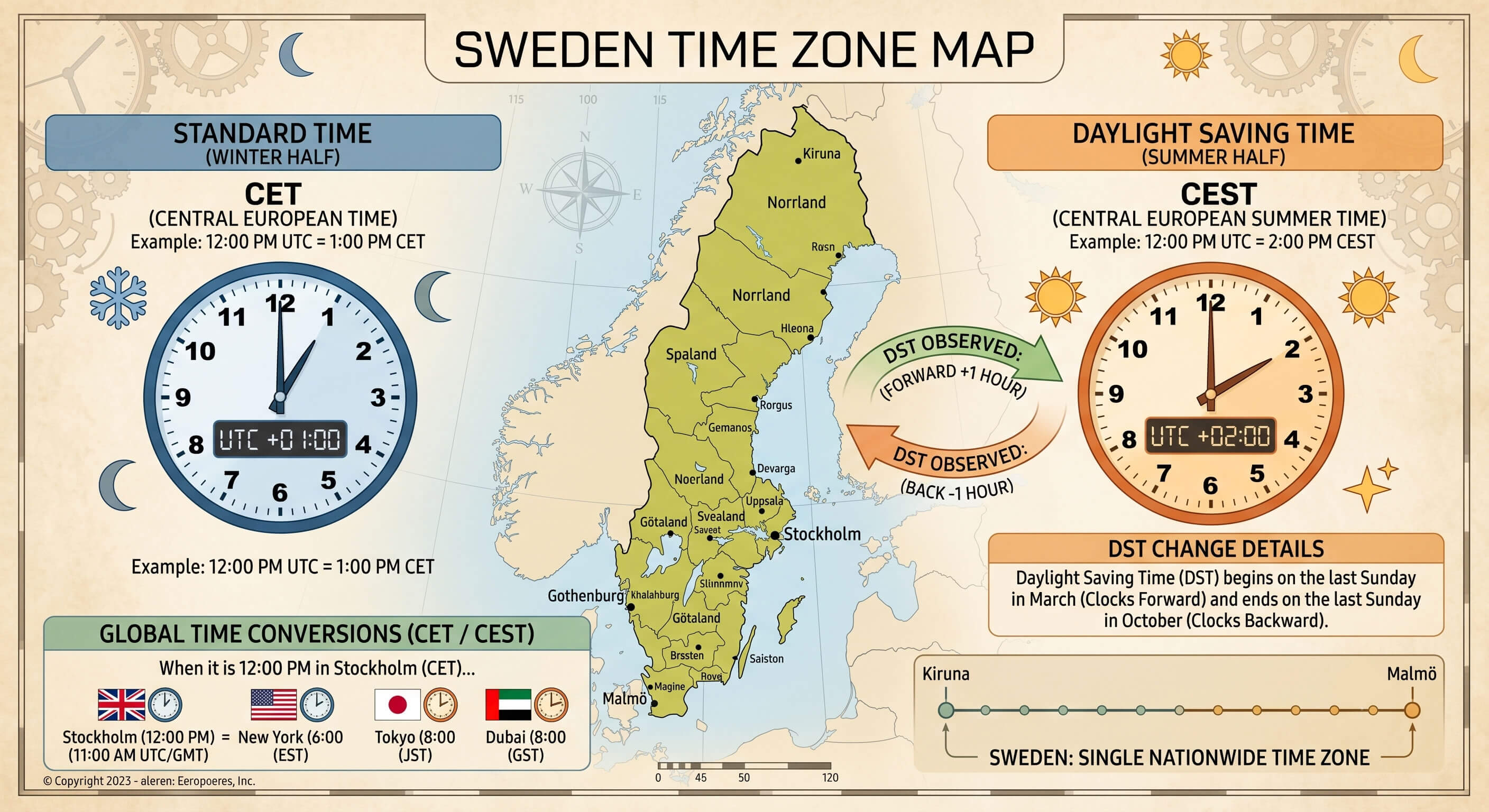
What Time Zone Is Sweden In?
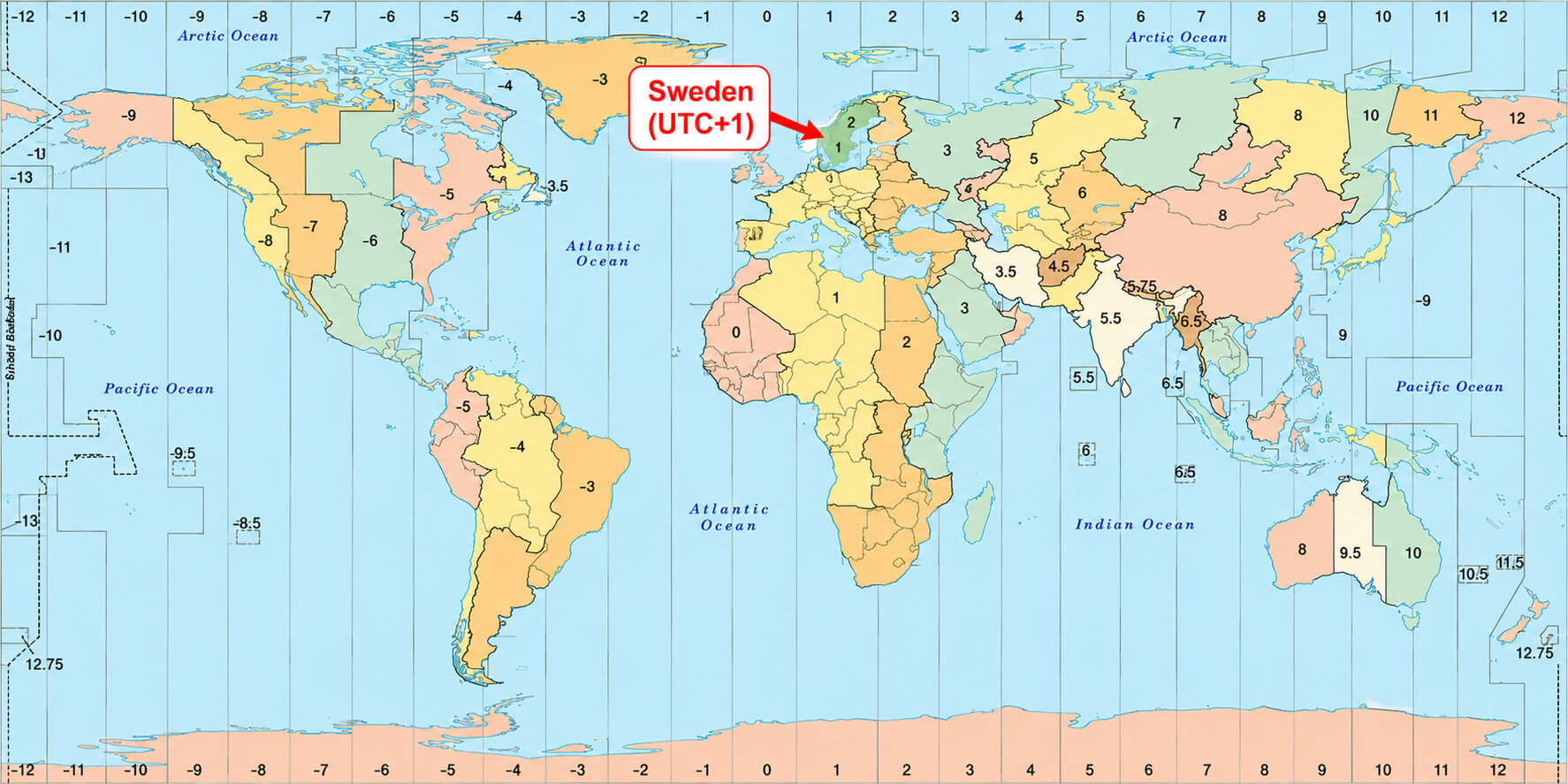
Sweden follows Central European Time (CET), which is UTC+01:00 during the standard-time period. During daylight saving time, the country changes to Central European Summer Time (CEST), which is UTC+02:00. The same official time applies throughout Sweden, including Stockholm, Gothenburg, Malmö, Uppsala, Västerås, Örebro, Linköping, and Helsingborg.
Eastern and Central Europe time zones map
World time zone map with Sweden
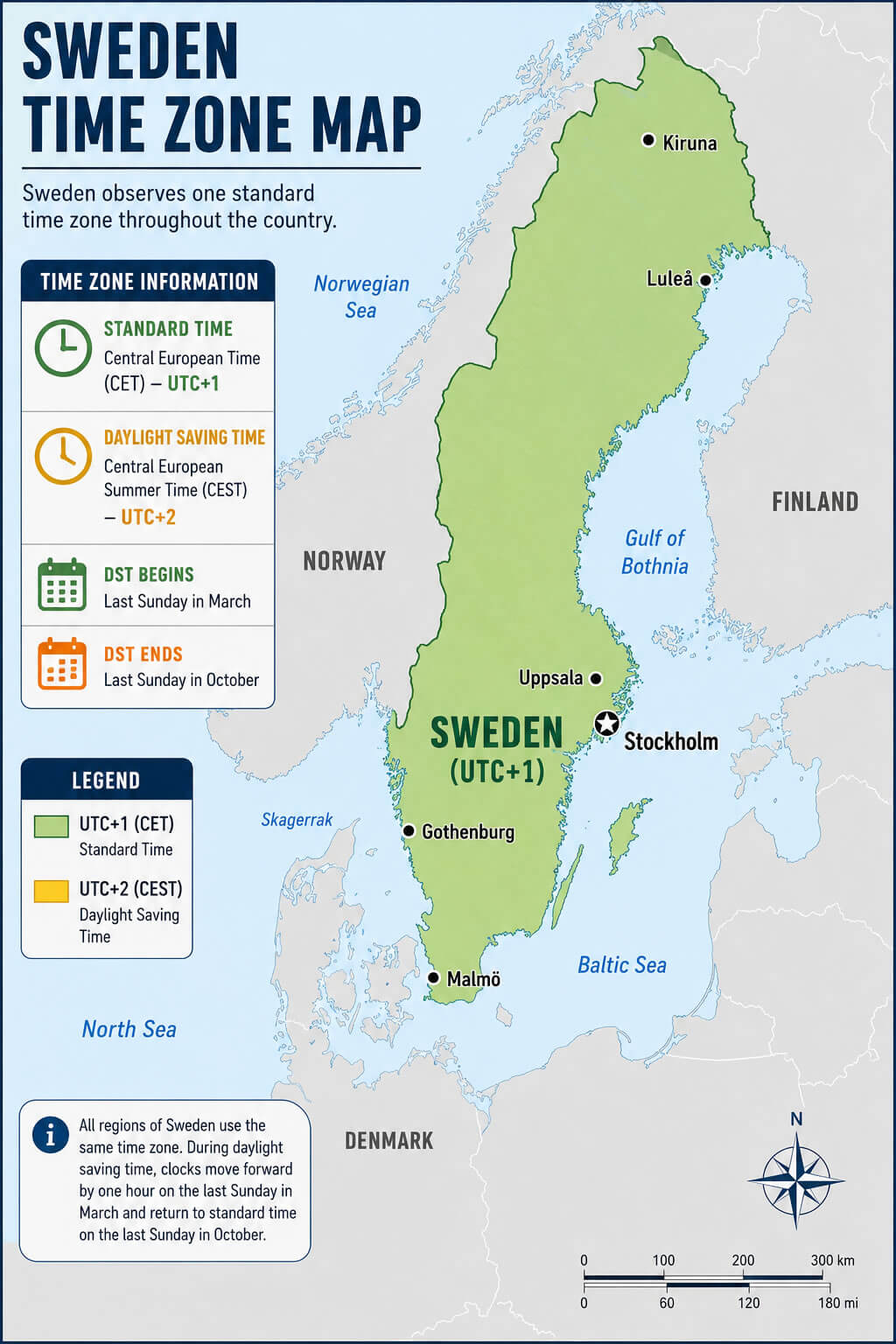
Does Sweden Use Daylight Saving Time?
Yes. Sweden observes daylight saving time. Clocks move forward by one hour on the last Sunday in March, changing from CET (UTC+01:00) to CEST (UTC+02:00), and move back by one hour on the last Sunday in October. Sweden follows the same seasonal clock-change system as Norway, Denmark, Germany, the Netherlands, and most other European countries.
Sweden Central European time map
Europe time zone map with clocks
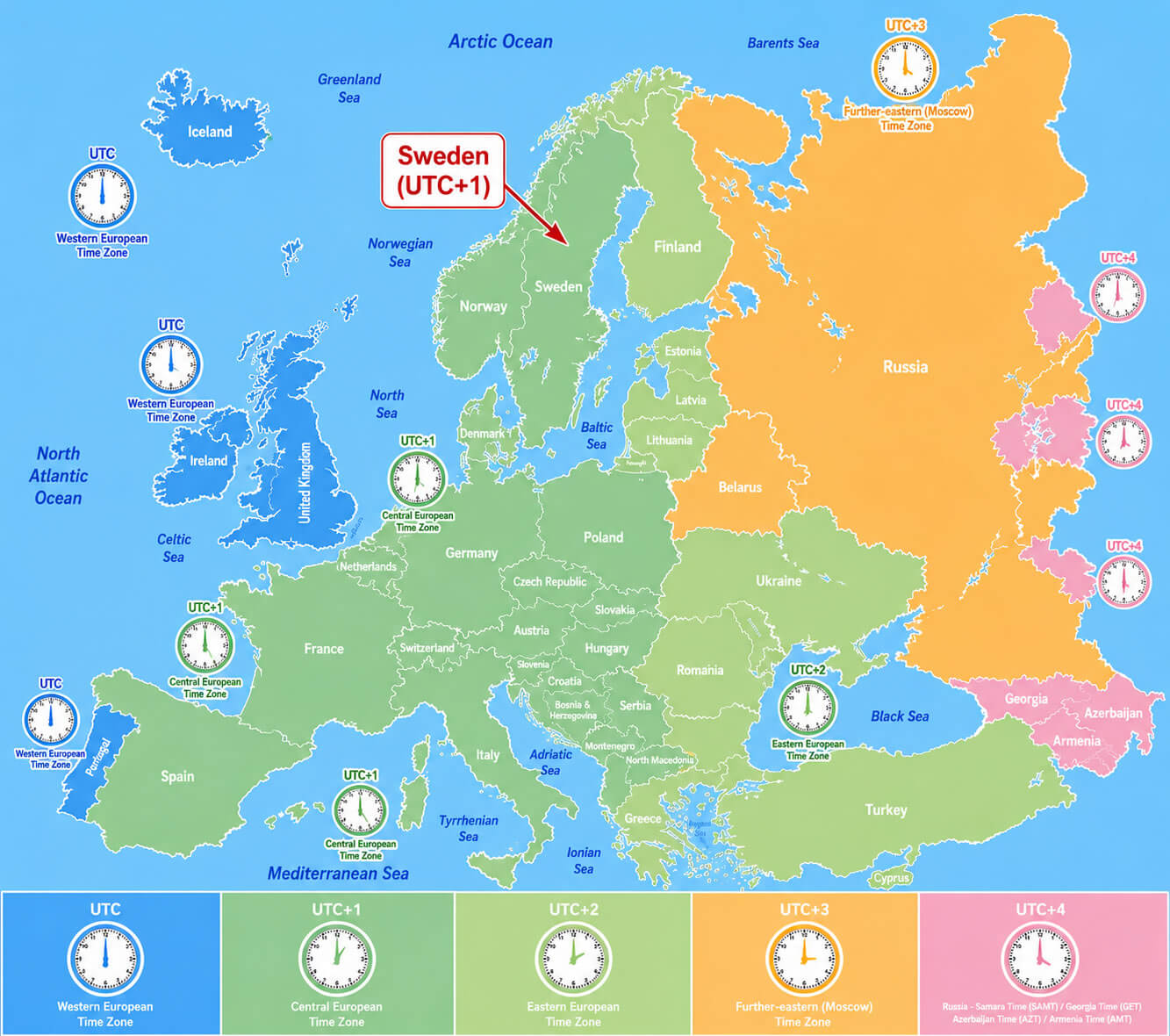
Europe time zone map with UTC offsets
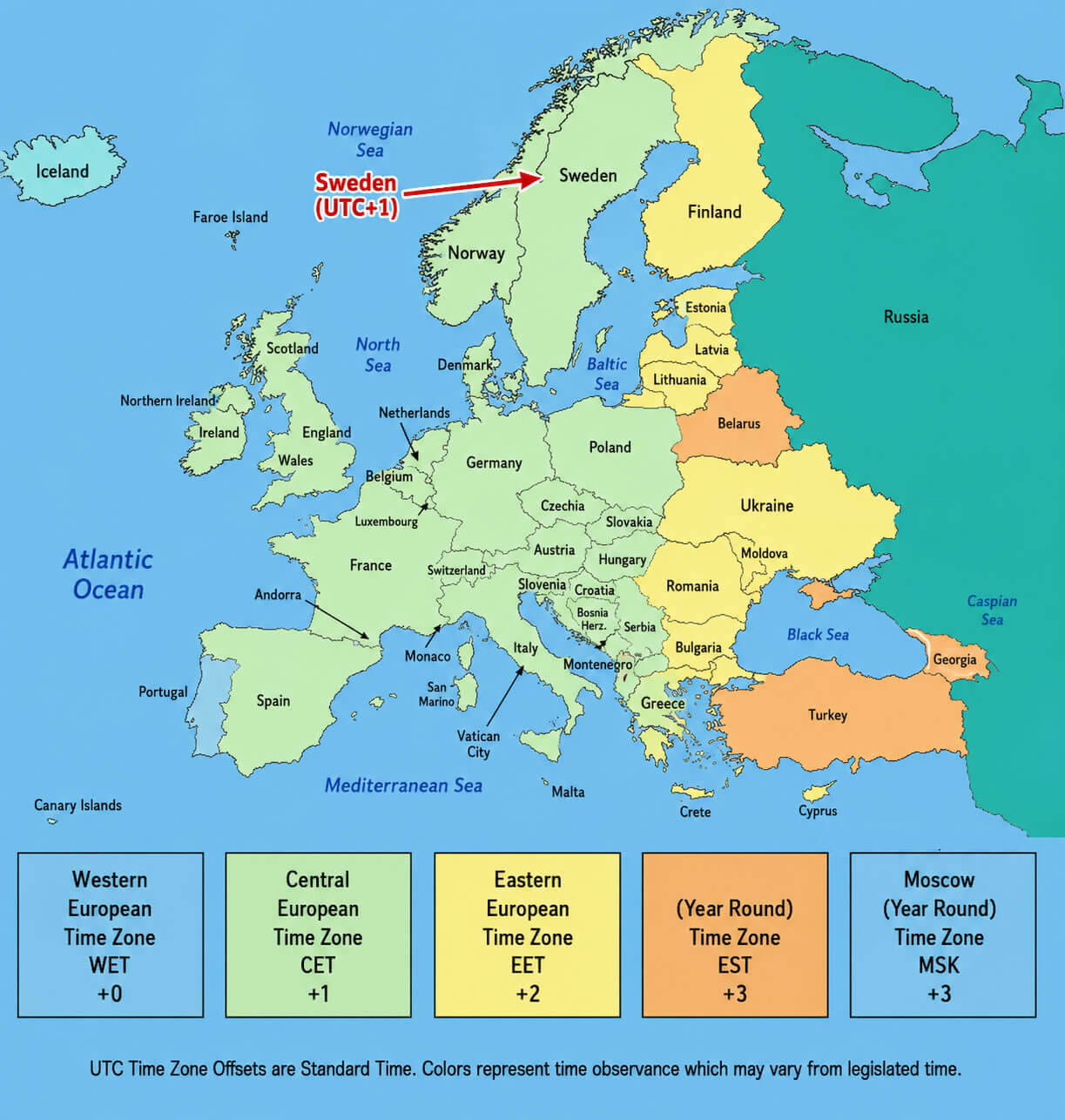
Europe time zones map
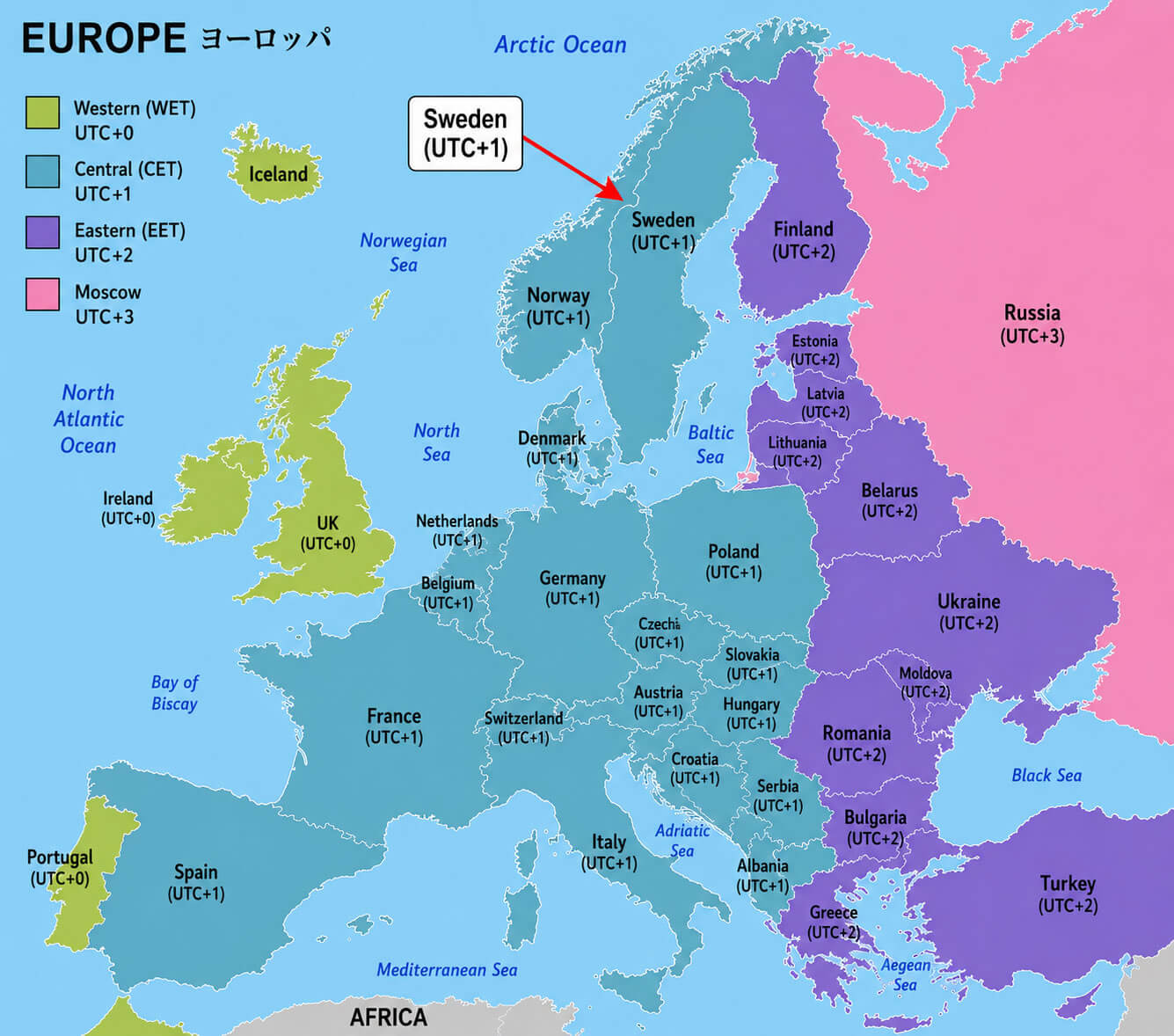
What Time Is It in Sweden (Stockholm) Right Now?
Europe UTC +1 time zone map with Sweden
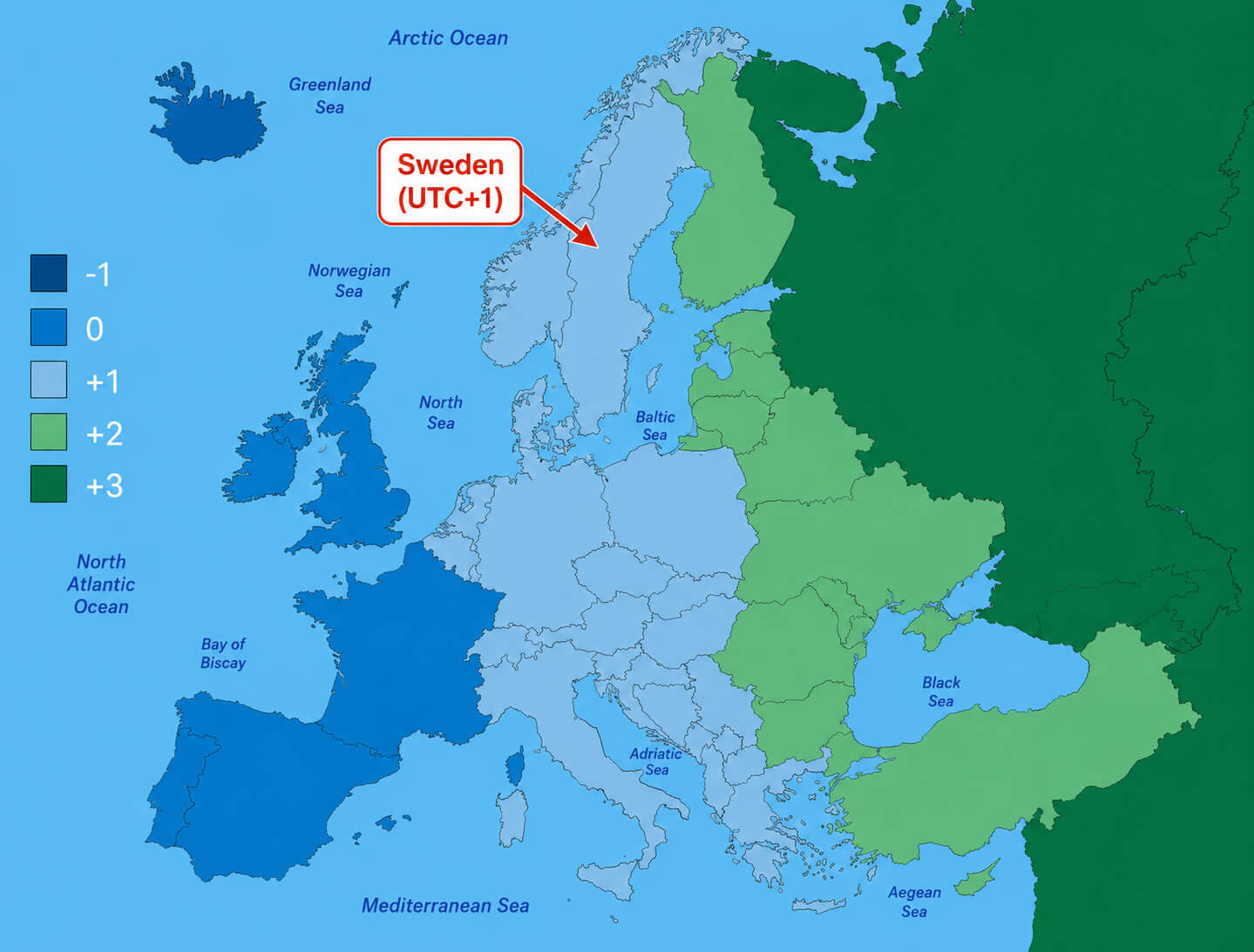
Europe UTC time zone map with Sweden
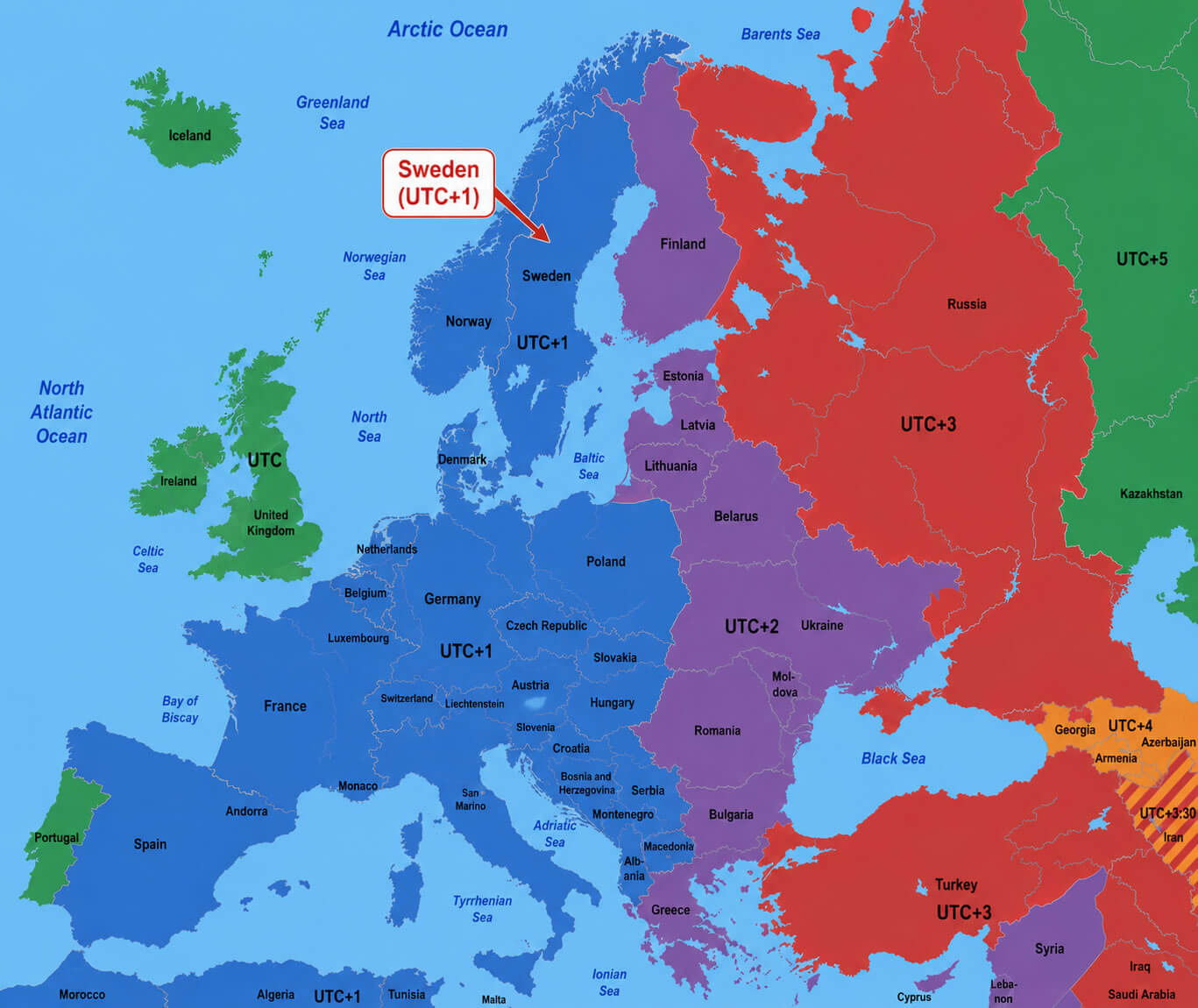
Sweden country time zone map
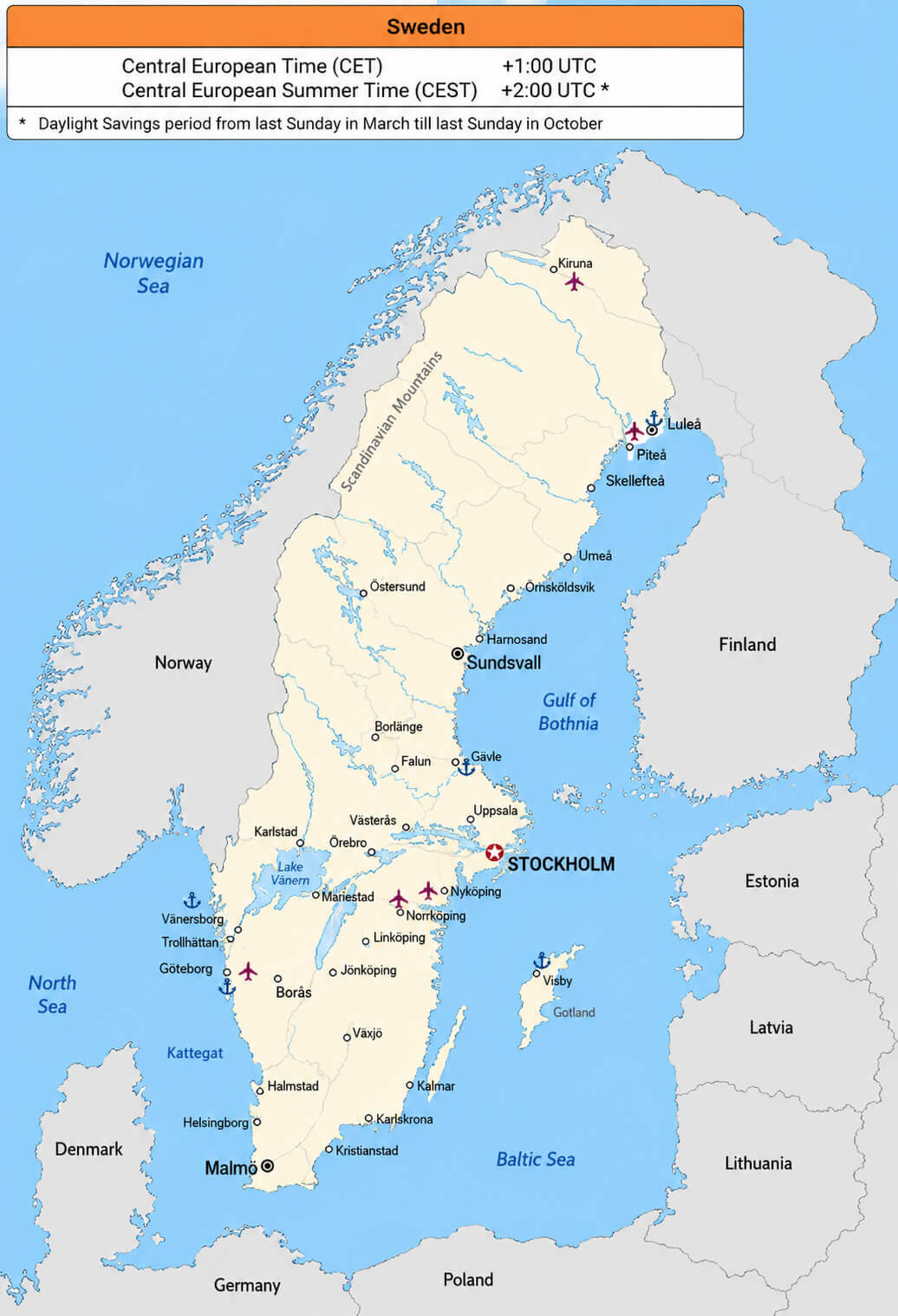
Sweden on Europe time zone map
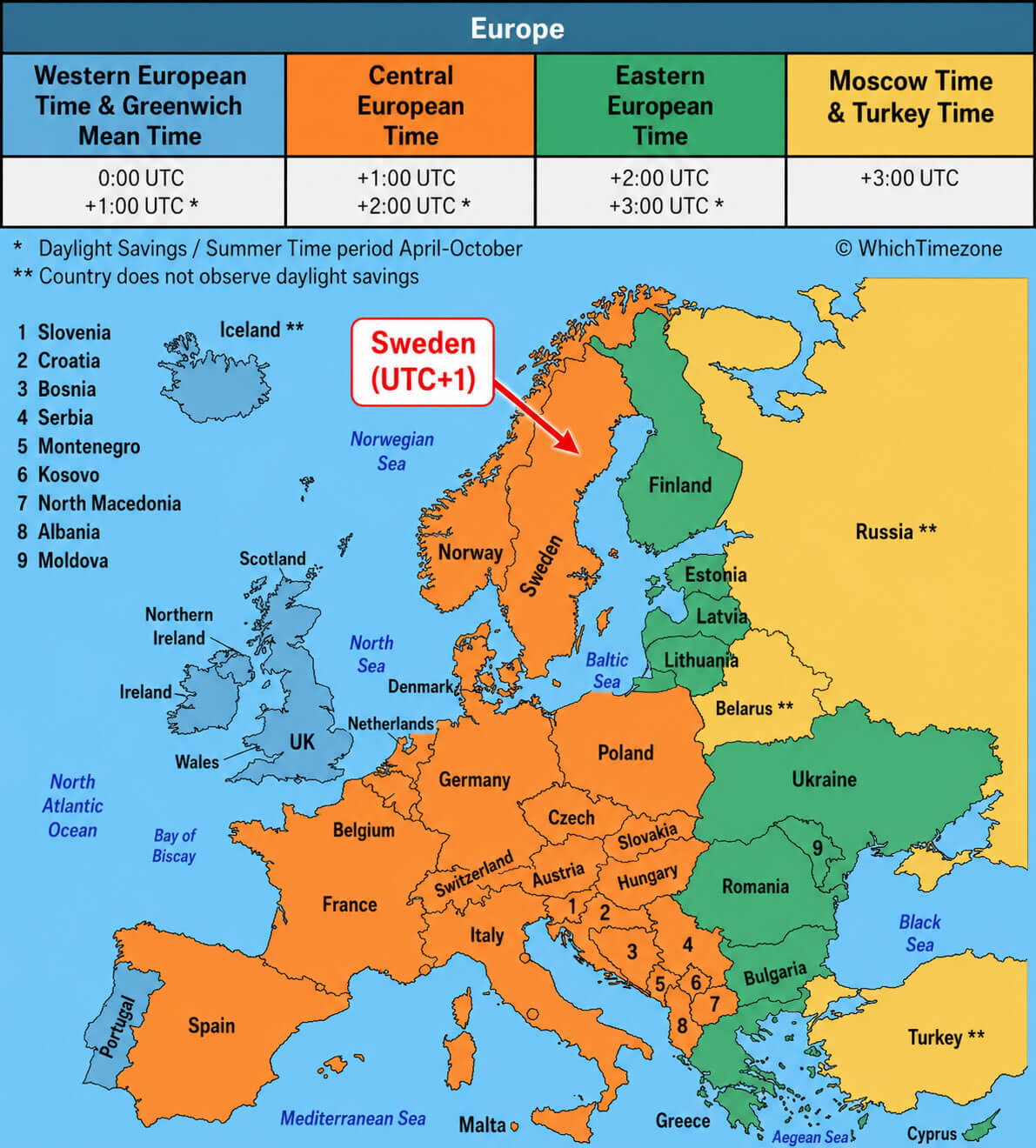
Sweden time zone in Europe map
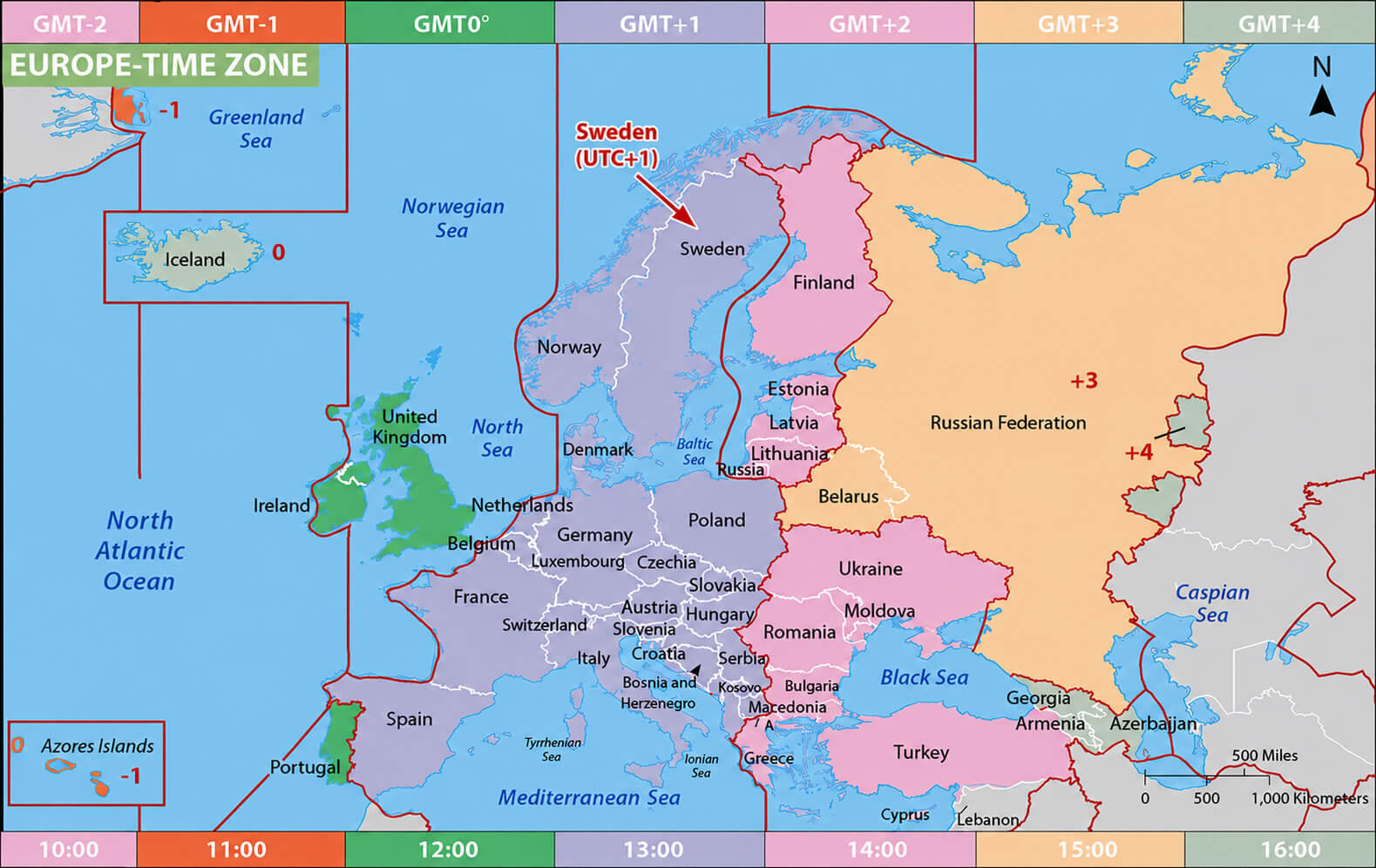
Sweden UTC +1 time zone map
Sweden Major Cities in This Time Zone:
- Stockholm
- Gothenburg
- Malmö
- Uppsala
- Västerås
- Örebro
- Linköping
- Helsingborg
Time Difference Between Stockholm and Major Cities
| City | Time Difference |
|---|---|
| Paris | Same time as Stockholm |
| Berlin | Same time as Stockholm |
| Rome | Same time as Stockholm |
| London | 1 hour behind Stockholm |
| New York | Usually 6 hours behind Stockholm |
| Stockholm | Local reference time |
| Los Angeles | Usually 9 hours behind Stockholm |
| Madrid | Same time as Stockholm |
| Istanbul | 1 or 2 hours ahead of Stockholm |
| Dubai | 2 or 3 hours ahead of Stockholm |
| Tokyo | 7 or 8 hours ahead of Stockholm |
| Sydney | Usually 8 to 10 hours ahead of Stockholm |
| Singapore | 6 or 7 hours ahead of Stockholm |
| Delhi | 3 hours 30 minutes or 4 hours 30 minutes ahead of Stockholm |
Time differences may change during the year because Sweden and some comparison cities observe daylight saving time on different dates, while other locations do not change their clocks.
Sweden Map with Country Border
What Countries Share the Same Time Zone?
- Norway — CET / CEST
- Denmark — CET / CEST
- Germany — CET / CEST
- Netherlands — CET / CEST
- Belgium — CET / CEST
- France — CET / CEST
- Italy — CET / CEST
- Austria — CET / CEST
World time zone map with Stockholm
FAQ
What time zone does Sweden use?
Sweden uses Central European Time (CET), UTC+01:00, during standard time and Central European Summer Time (CEST), UTC+02:00, during daylight saving time.
Does Sweden change clocks for daylight saving time?
Yes. Sweden moves its clocks forward on the last Sunday in March and back on the last Sunday in October.
Is all of Sweden in the same time zone?
Yes. Stockholm, Gothenburg, Malmö, Uppsala, Västerås, Örebro, and all other parts of Sweden use the same national time.
Is Sweden in the same time zone as Norway, Denmark, and Germany?
Yes. Sweden, Norway, Denmark, and Germany use CET during standard time and CEST during daylight saving time.
Is Stockholm in the same time zone as Oslo, Copenhagen, and Berlin?
Yes. Stockholm, Oslo, Copenhagen, and Berlin normally have the same local time because they follow the same CET and CEST clock system.
What time is Sweden compared with UTC?
Sweden is one hour ahead of UTC during standard time and two hours ahead of UTC during daylight saving time.
When does daylight saving time begin and end in Sweden?
Daylight saving time begins on the last Sunday in March and ends on the last Sunday in October.
What is the IANA time zone for Stockholm?
The IANA time zone identifier for Stockholm and Sweden is Stockholm.
Feel free to explore these pages as well:
- Poland Time Zone Map
- Portugal Time Zone Map
- Hungary Time Zone Map
- Greece Time Zone Map
- Sweden Time Zone Map
- Ukraine Time Zone Map
- Austria Time Zone Map
- Norway Time Zone Map
- Denmark Time Zone Map
- Belgium Time Zone Map
- Switzerland Time Zone Map
- Netherlands Time Zone Map
Copyright Turkey Travel Guide - 2005 - 2026. All rights reserved. Privacy Policy | Disclaimer