
Population Map of Sunni Islam
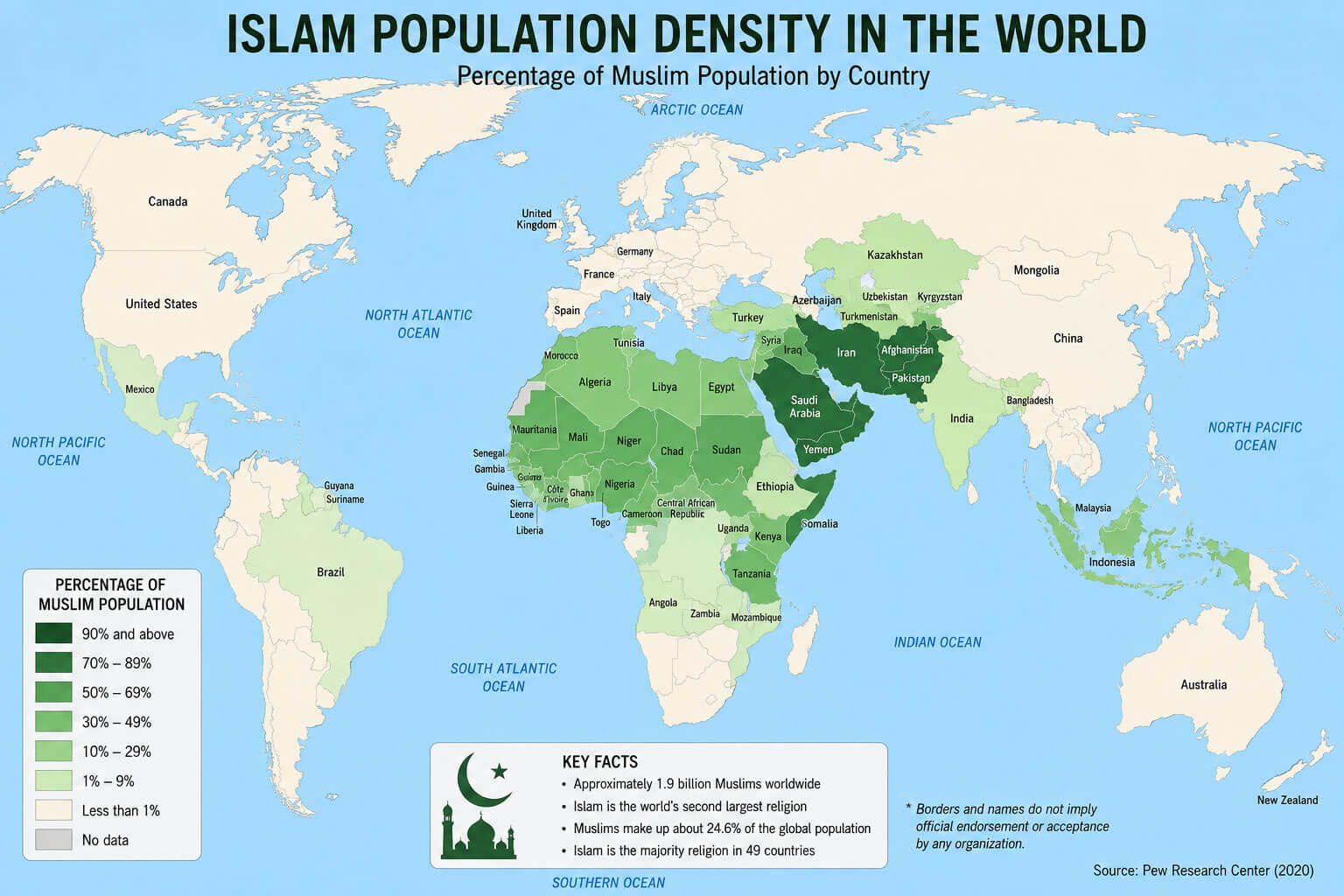
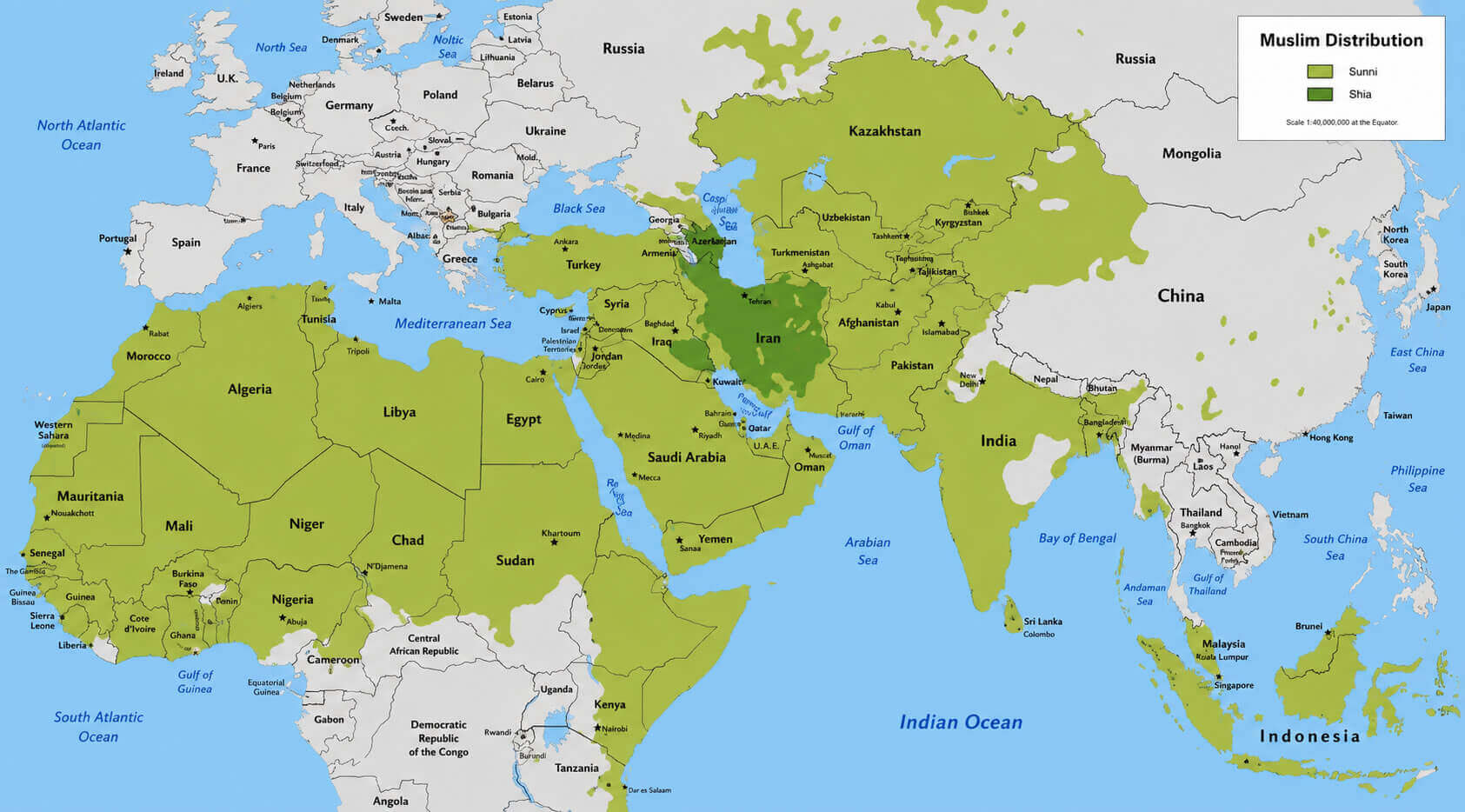
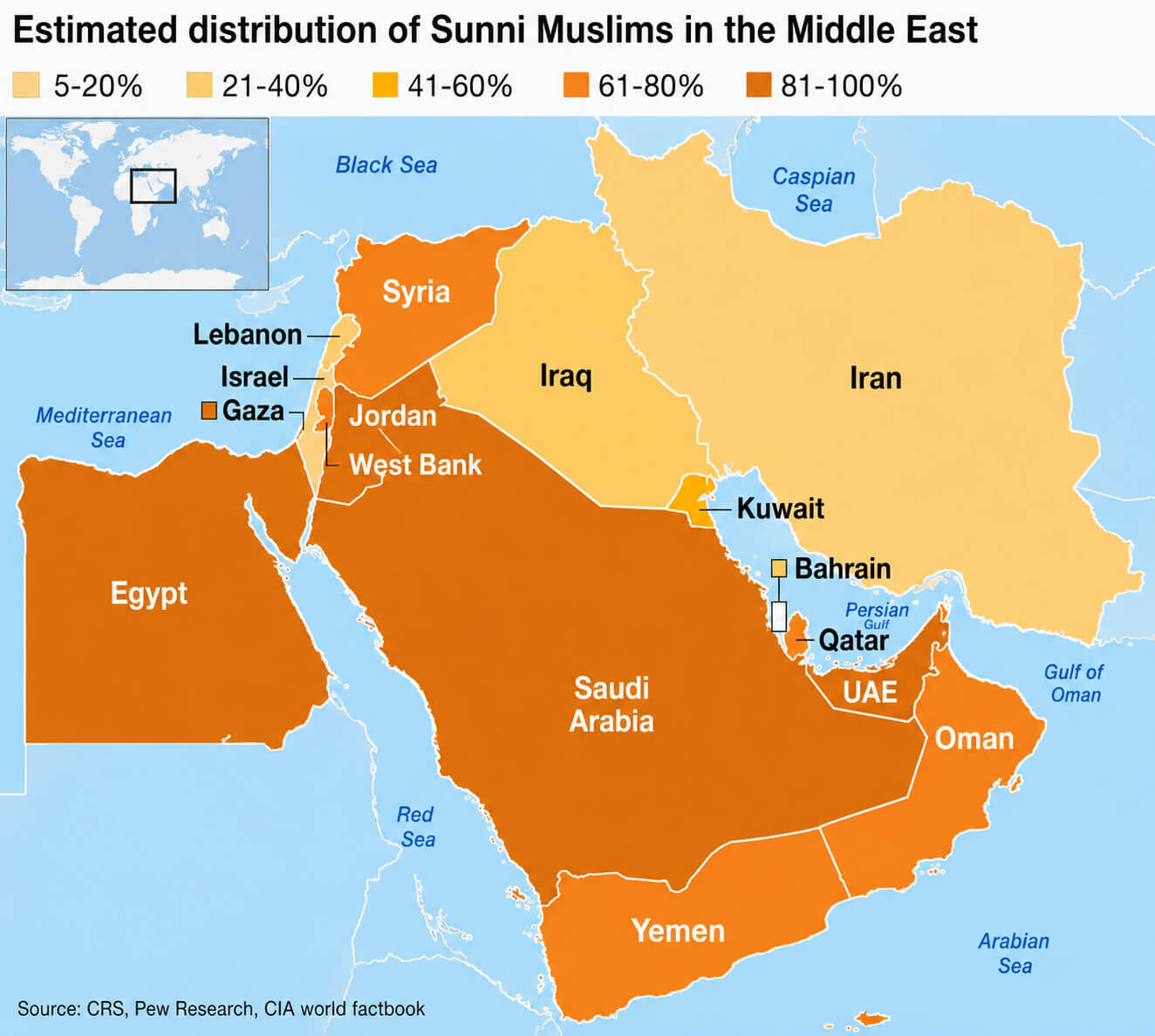
The Sunni Islam Population Map offers a comprehensive view of the global distribution of Sunni Muslims, showing the countries and regions where Sunni Islam forms the majority of the Muslim population. An Estimated Sunni Muslim Distribution Middle East map highlights major Sunni population centers across Saudi Arabia, Egypt, Turkey, Jordan, Syria, and much of North Africa, while an Islam Middle East countries map provides a broader geographical perspective on the distribution of Muslim communities throughout the region.
Islam by country World population map
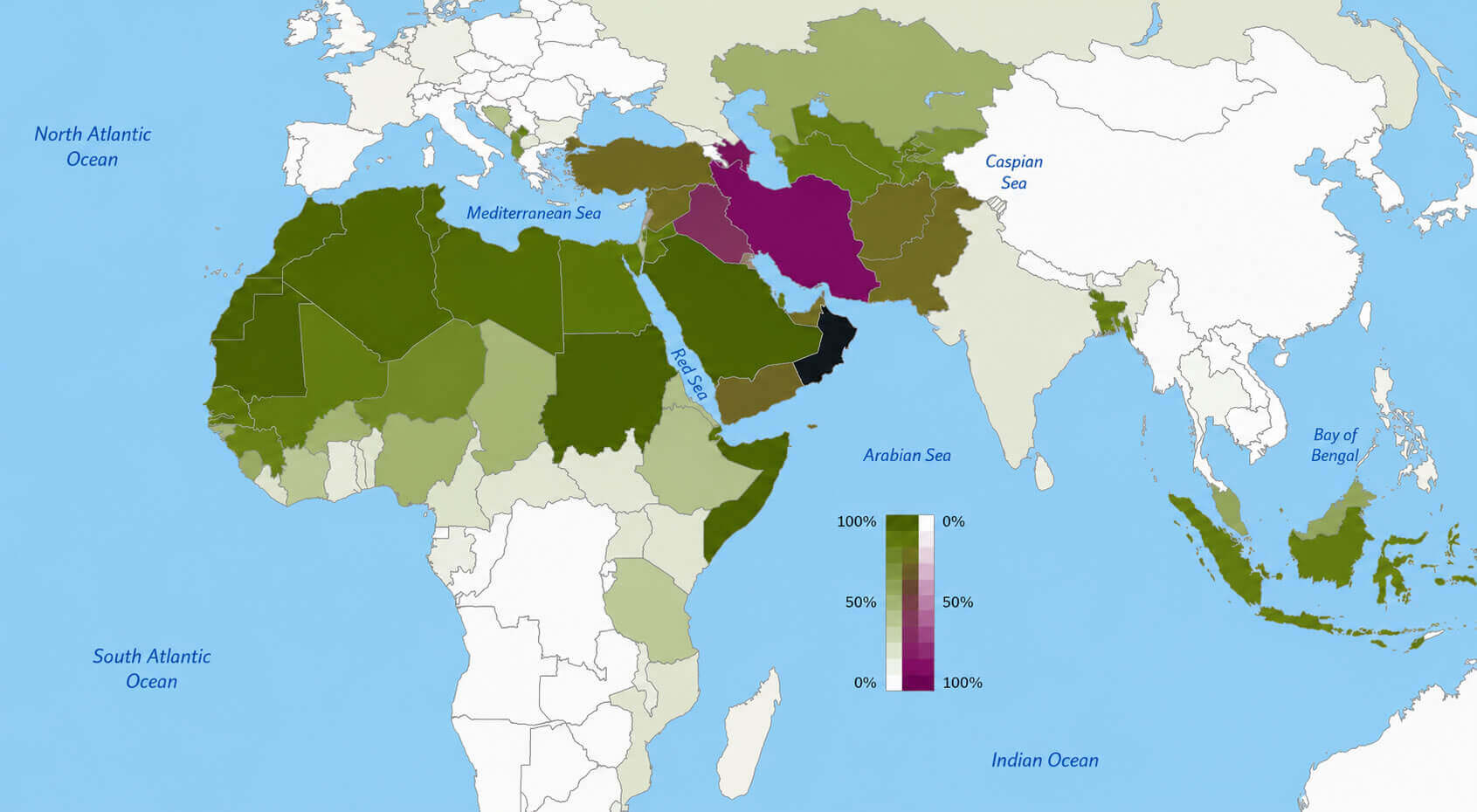
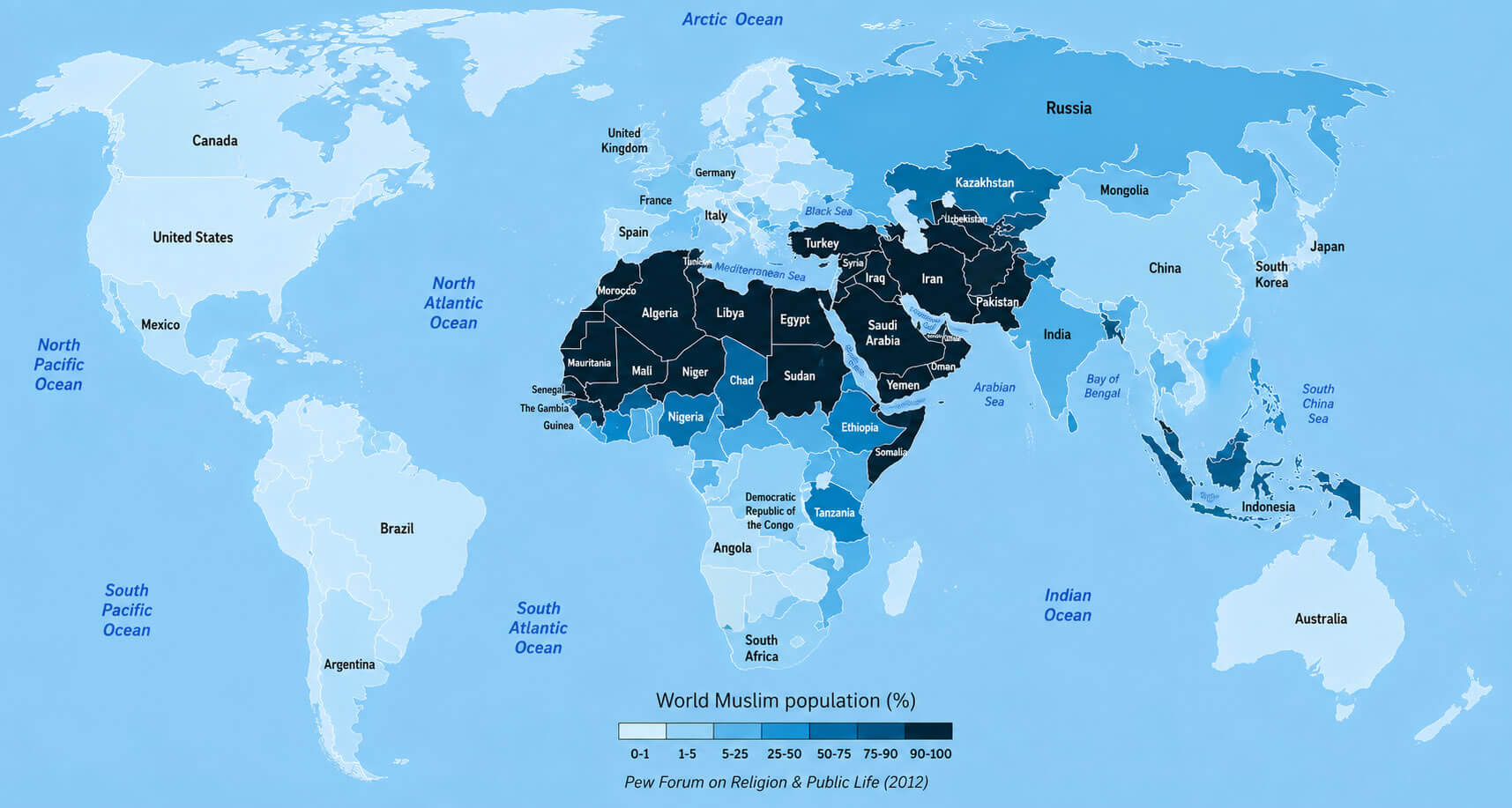
World Muslim population map
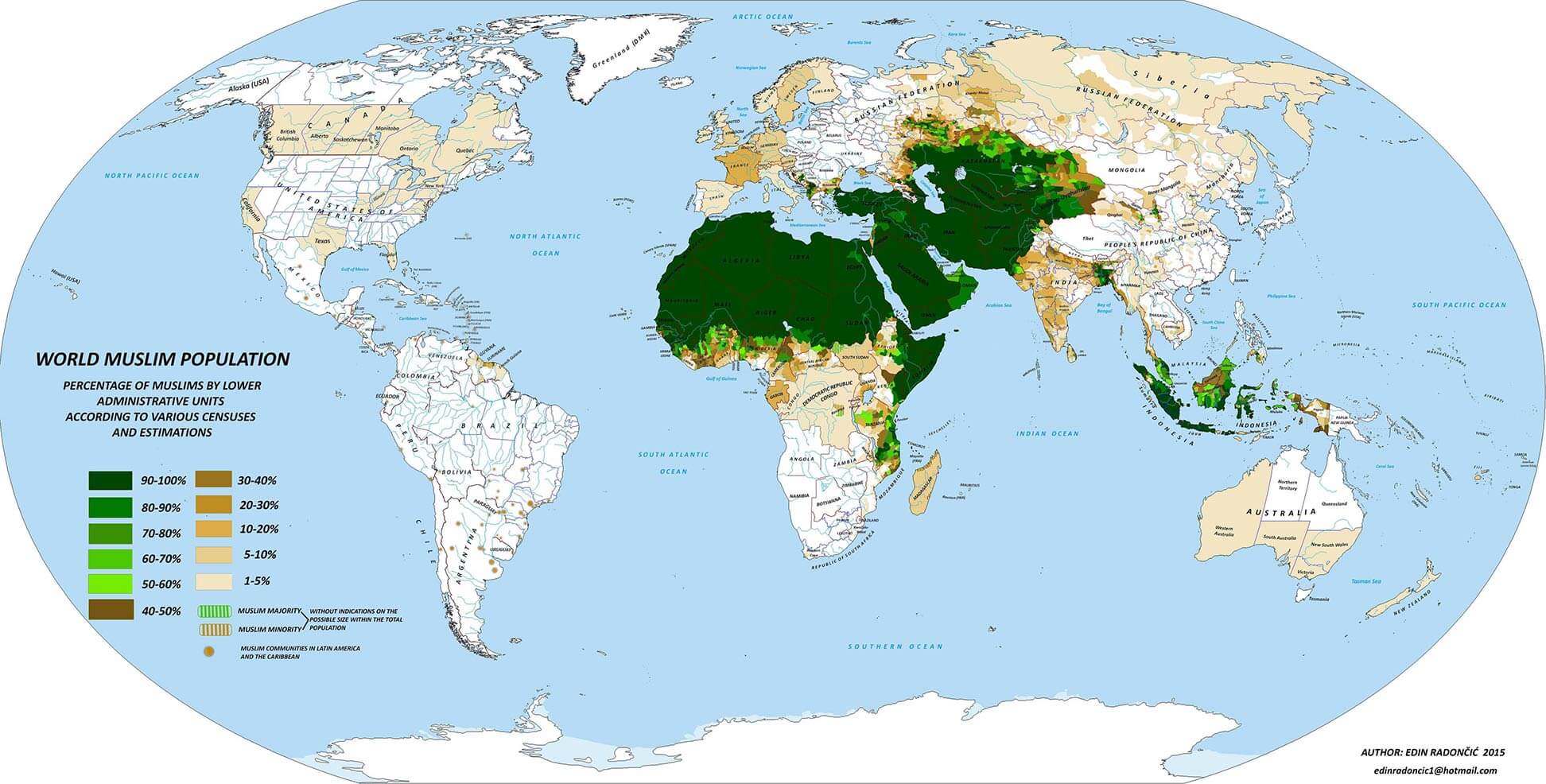
Islam population density by country map
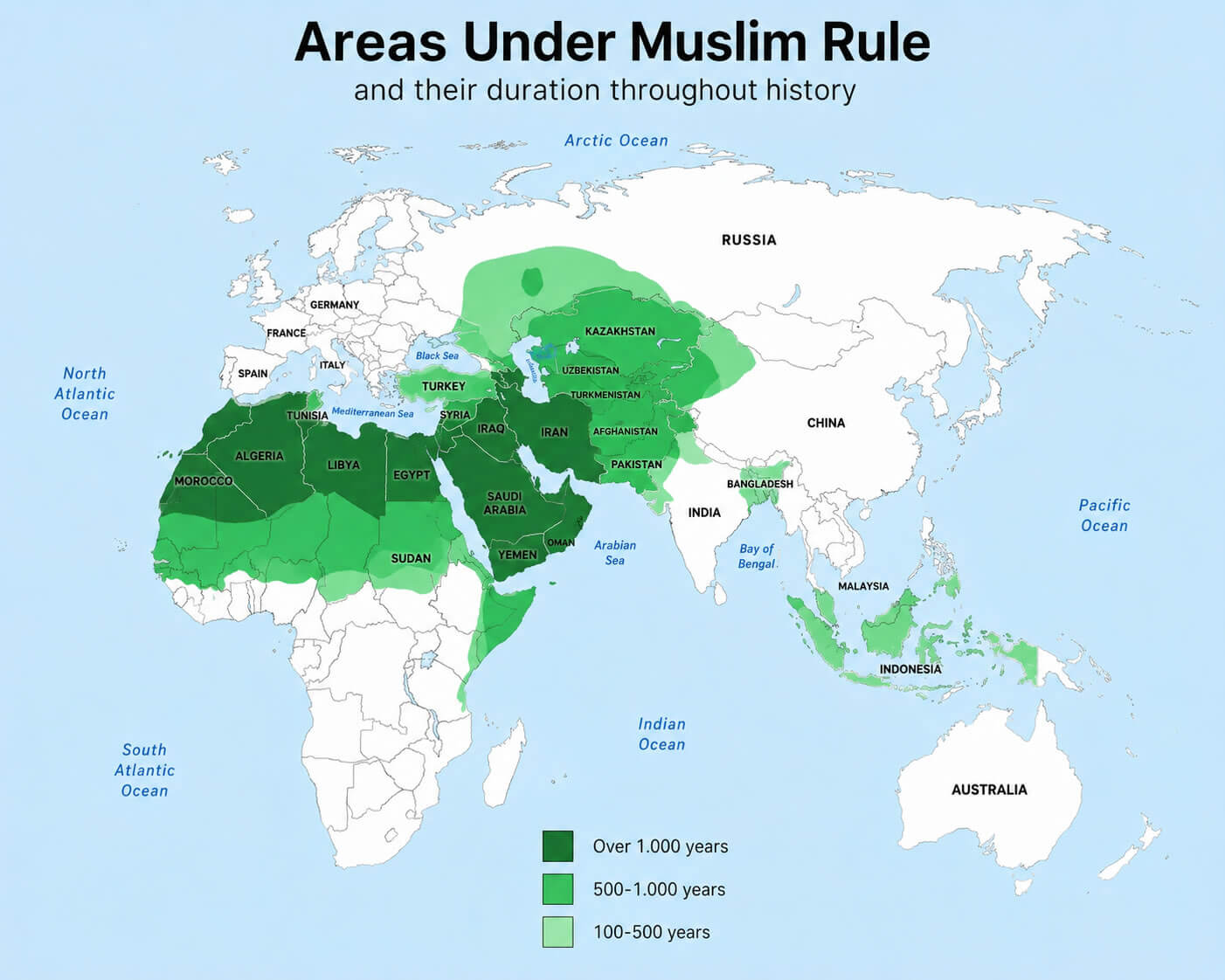
Areas under Muslim rule World map
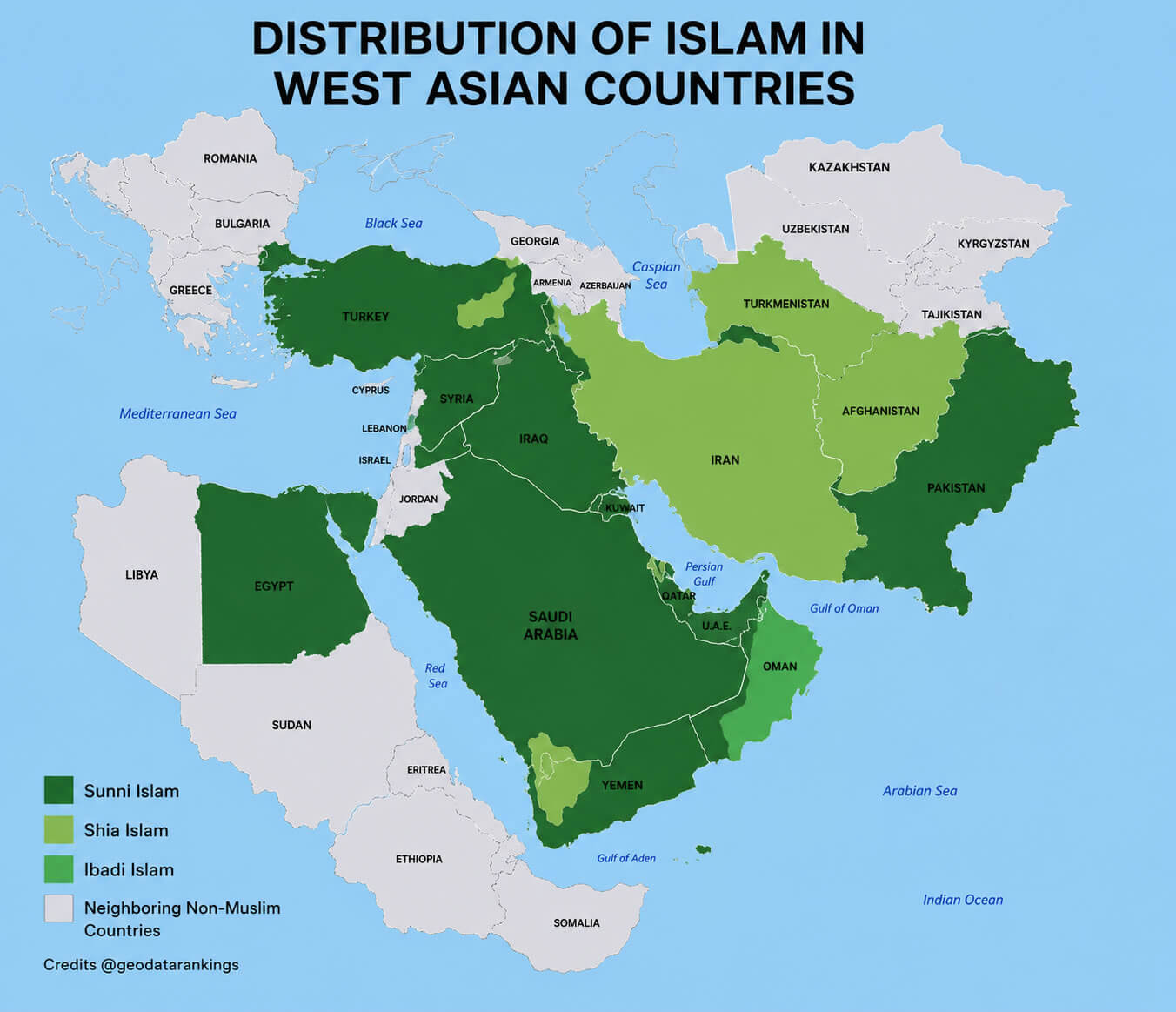
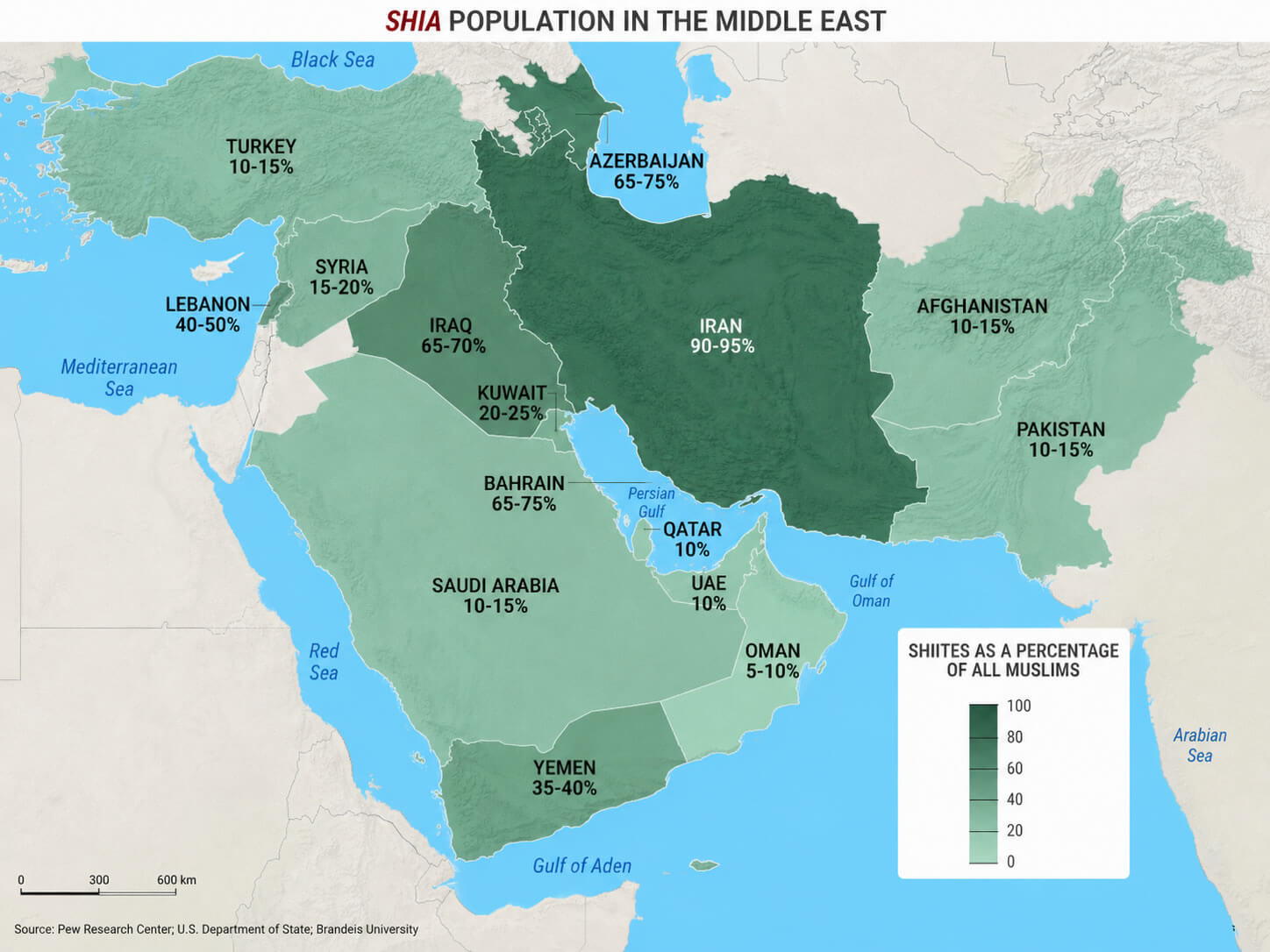
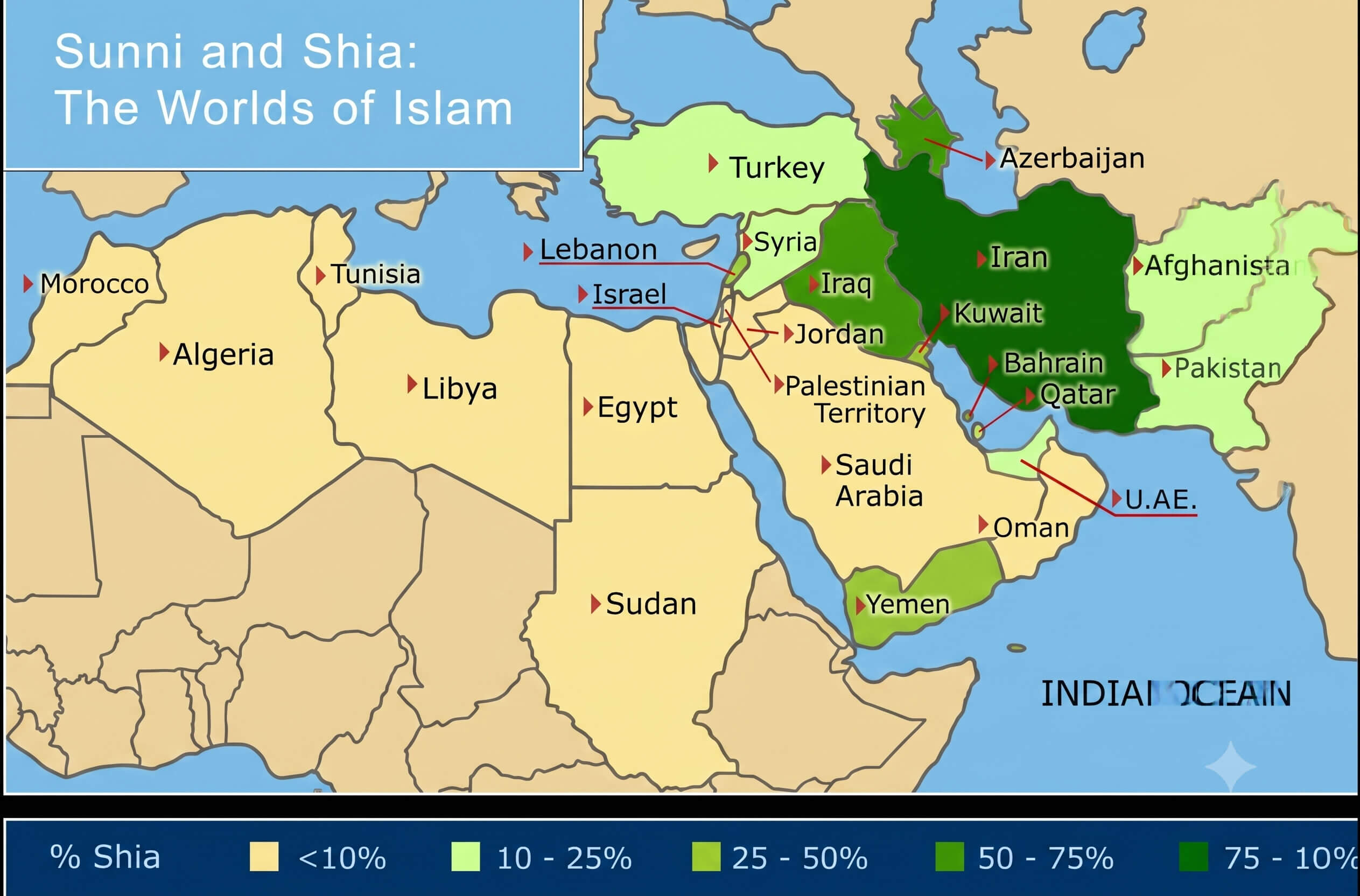
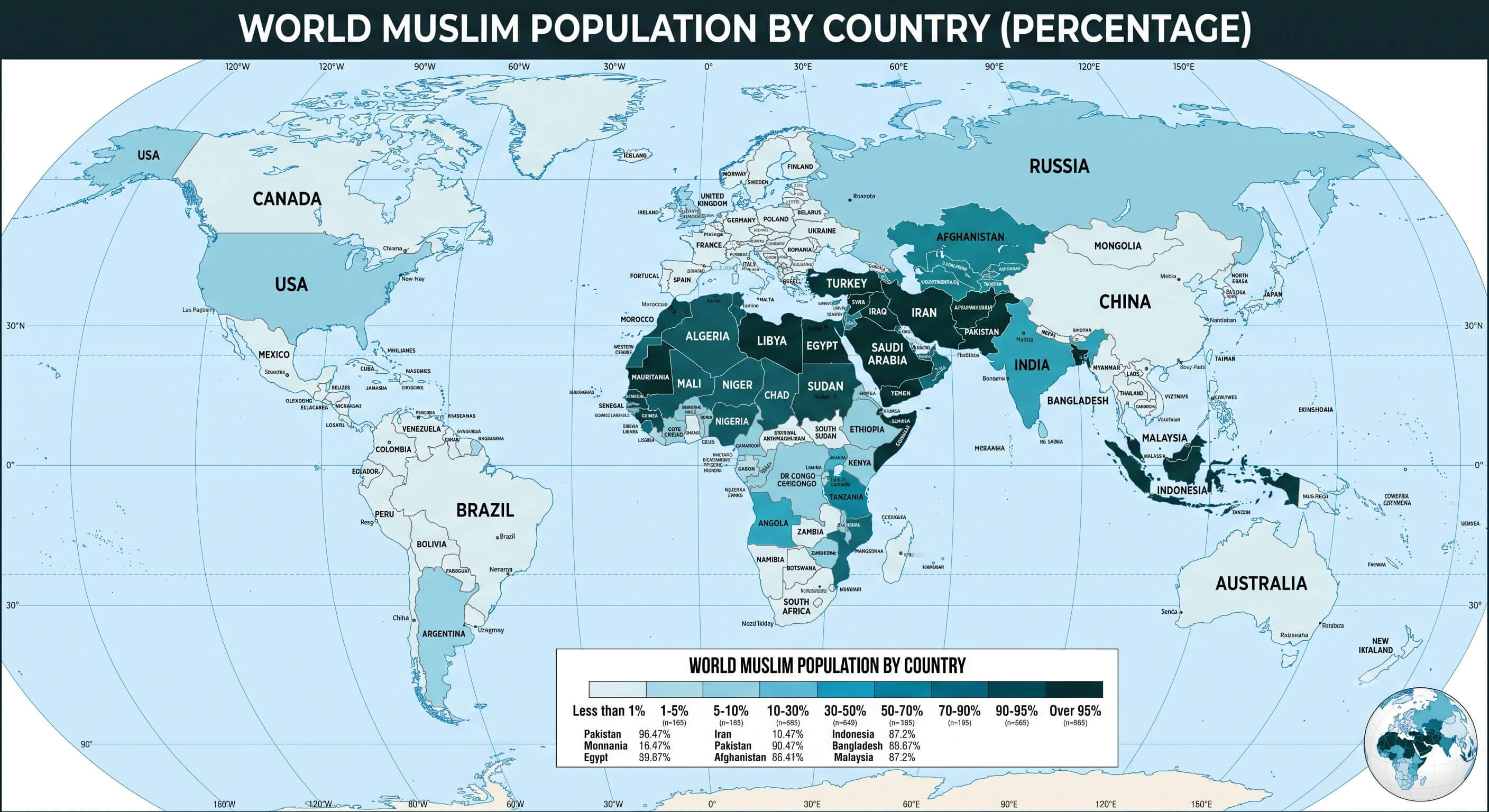
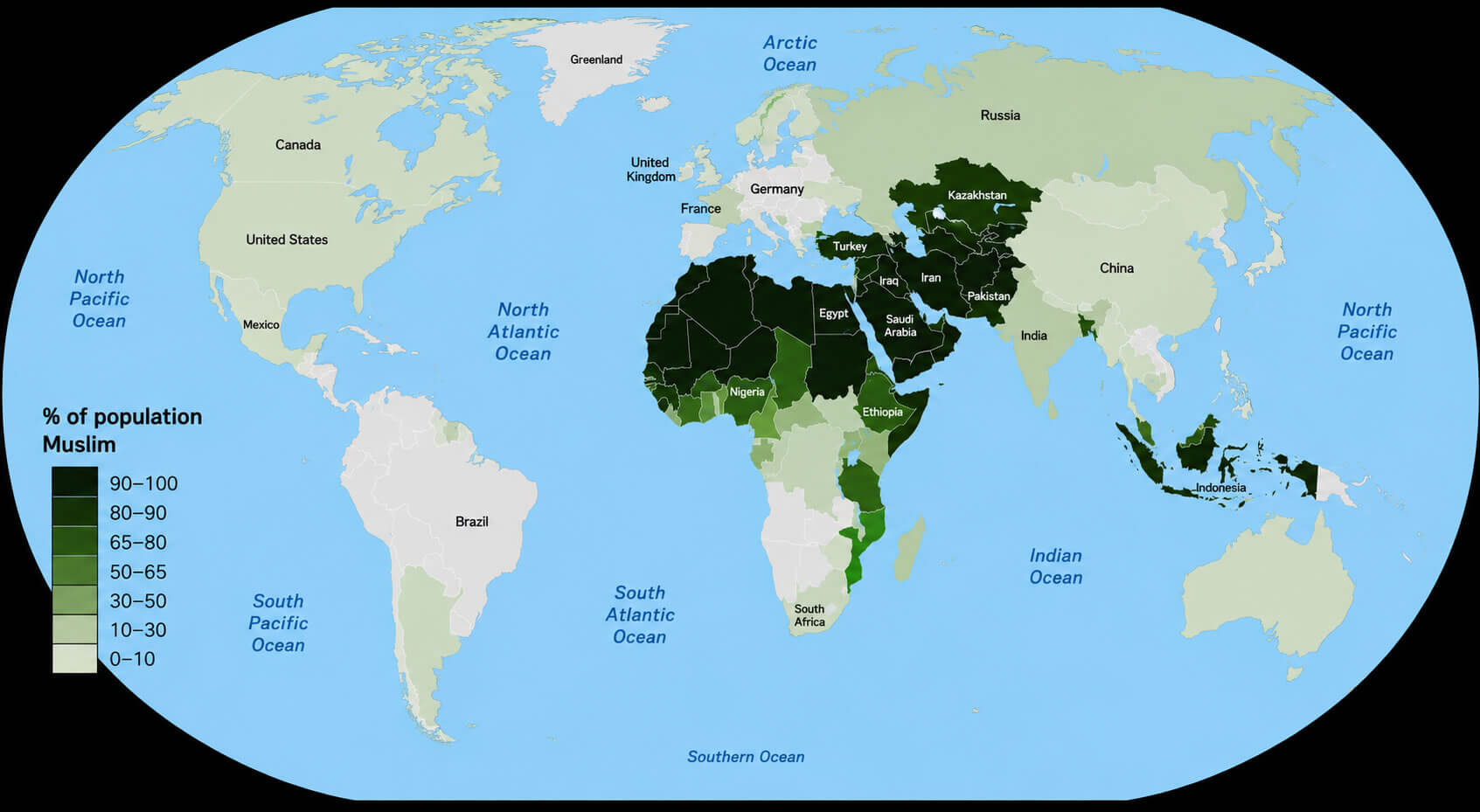
A Sunni and Shia Muslim population map provides a clear comparison of the geographical distribution of Islam"s two largest branches, highlighting Sunni-majority regions as well as significant Shia communities in countries such as Iran, Iraq, Bahrain, Lebanon, and Azerbaijan. For a broader global view, a Muslim population distribution World map, Islam population density World map, and Islam population density by country map show how Muslim populations are distributed across North and West Africa, the Middle East, Central Asia, South Asia, and Southeast Asia.
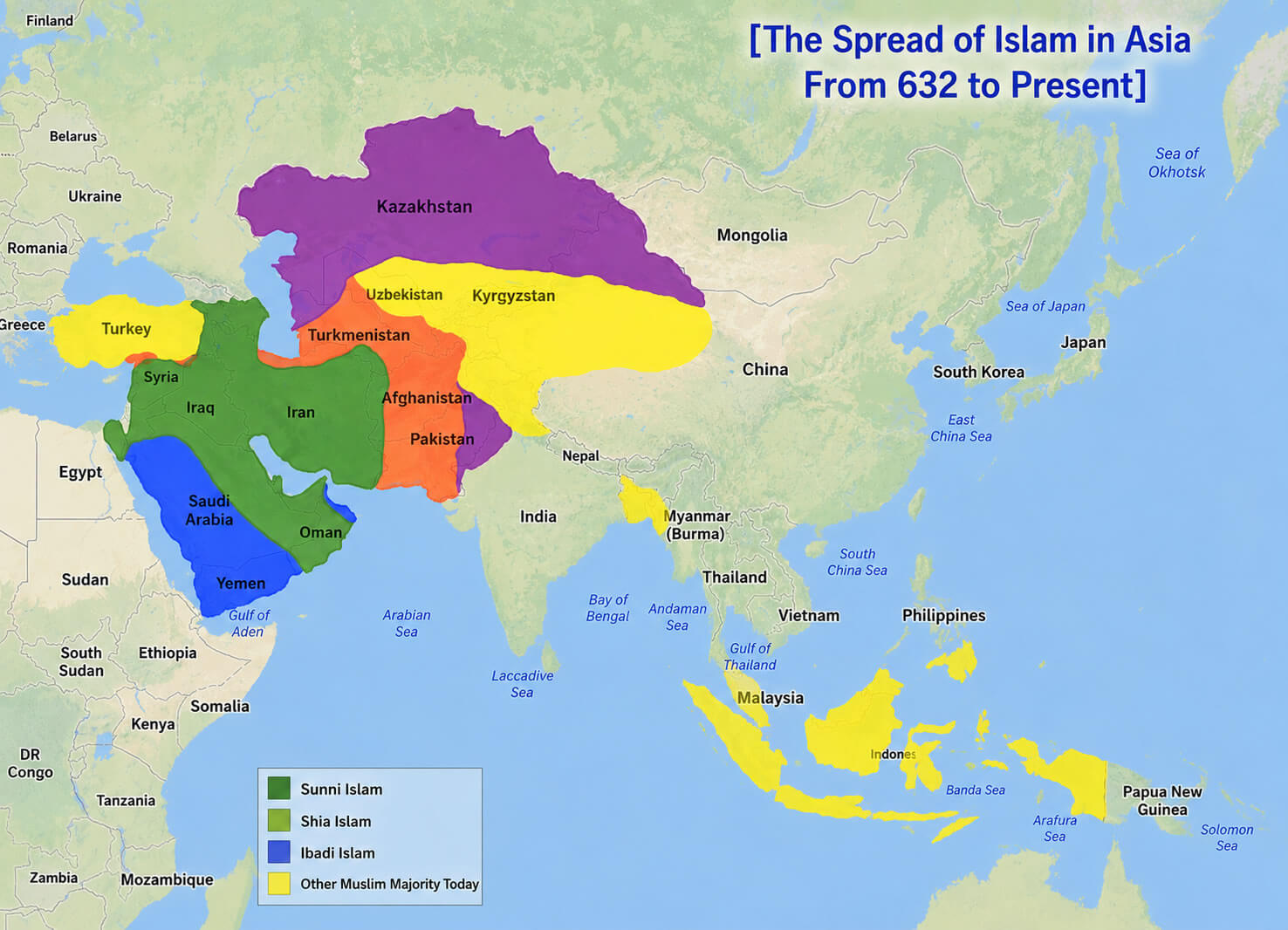
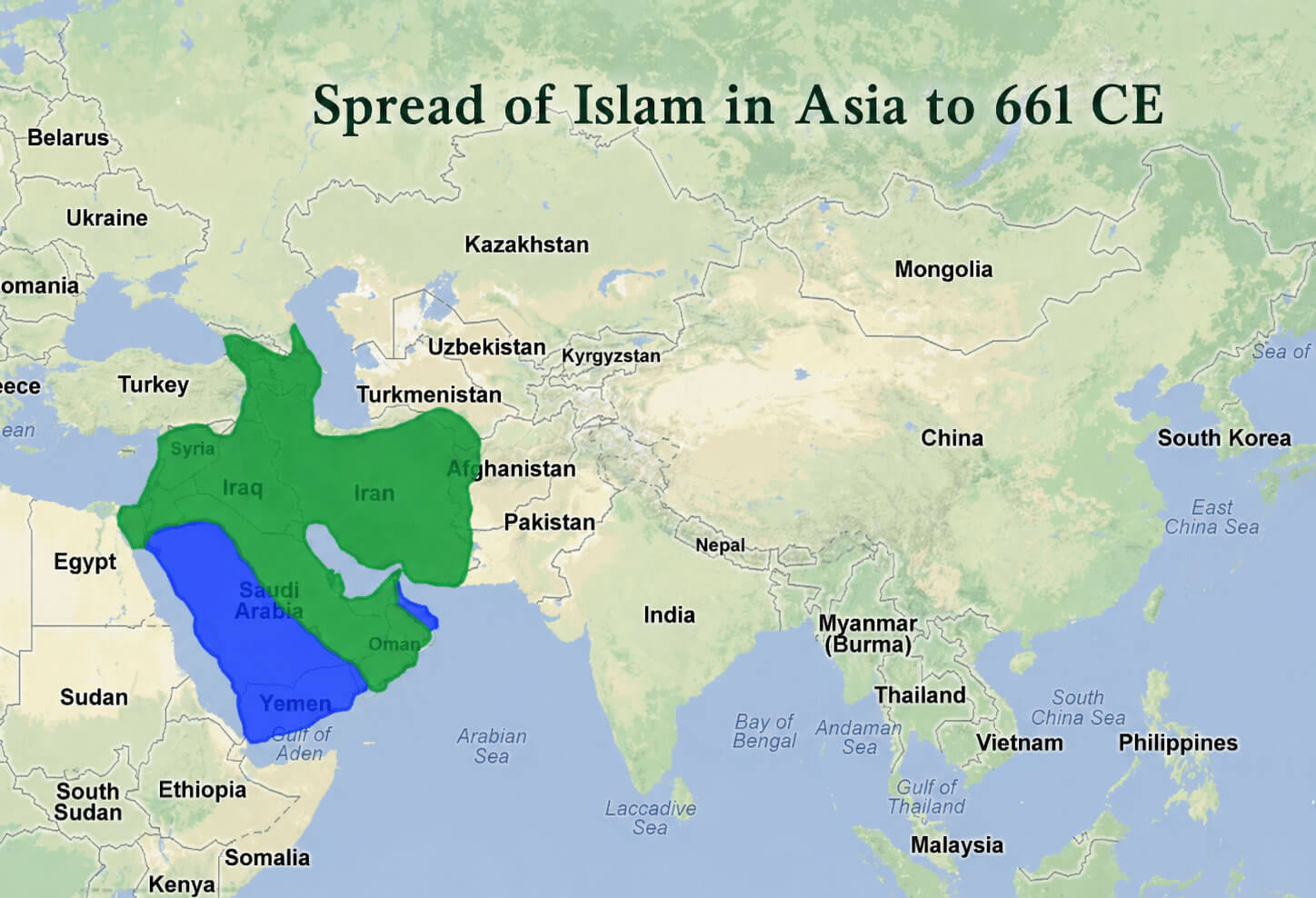
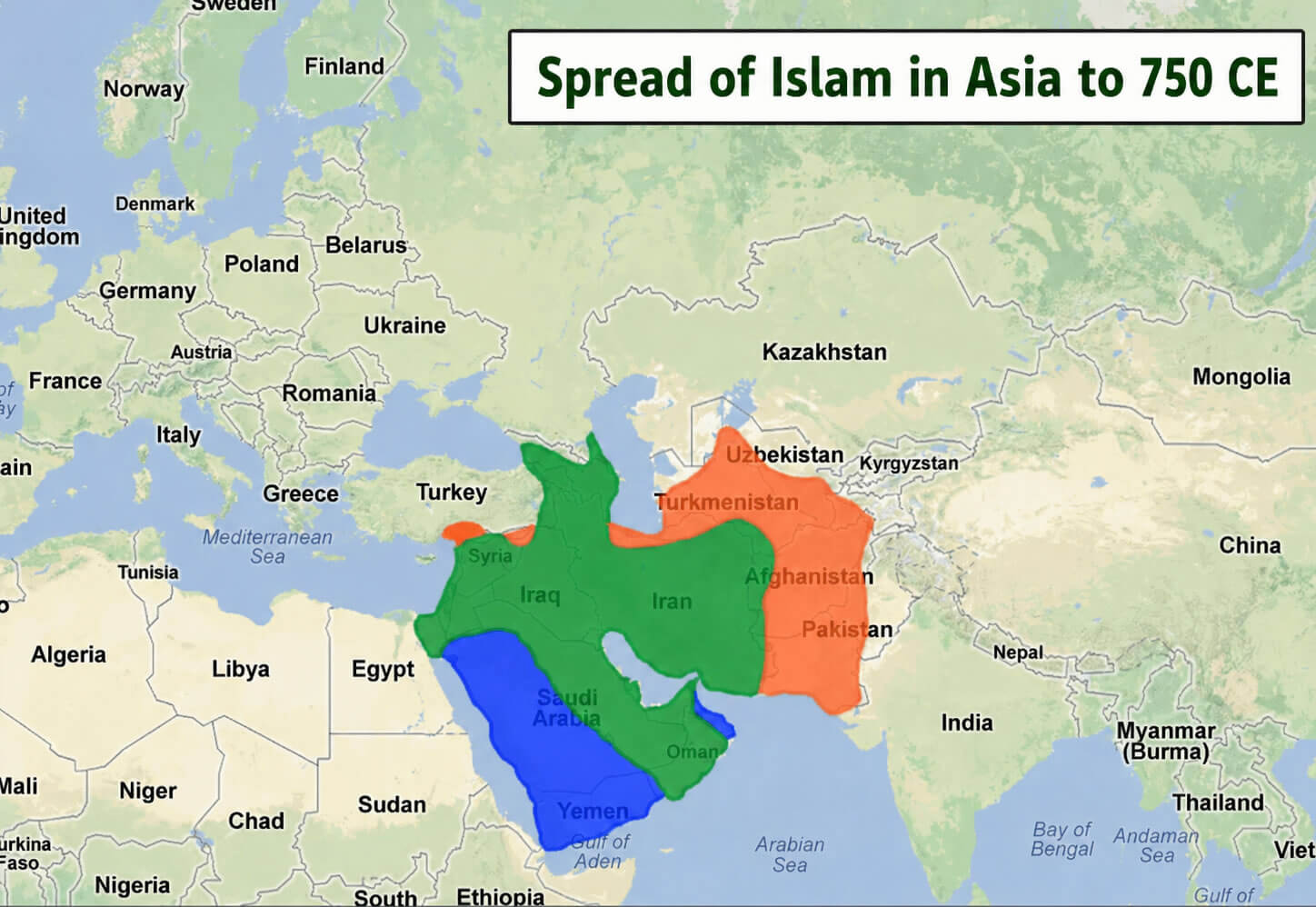
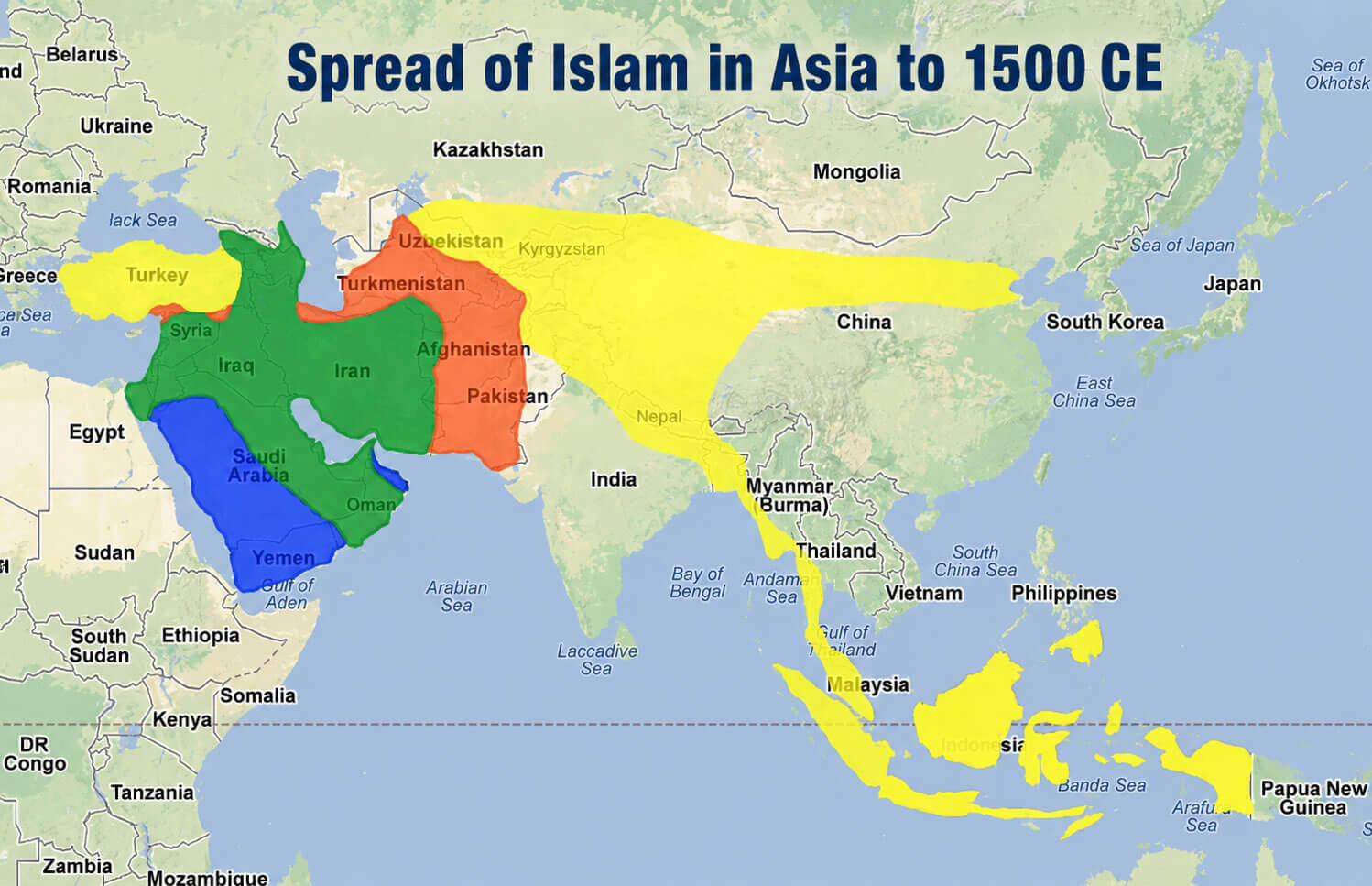
The historical development of Islam can be explored through a Spread of Islam in Asia map from 632 and maps illustrating the Spread of Islam in Asia to 661 CE, Spread of Islam in Asia to 750 CE, and Spread of Islam in Asia to 1500 CE. Together with an Areas under Muslim rule World map, these historical maps illustrate how Islam expanded across different regions through political expansion, trade networks, migration, religious scholarship, and cultural exchange. An Islam in Africa population map, Distribution of Islam in West Asian countries map, and Islam by country World population map provide additional perspectives on the modern geographical distribution of Islam. Historical landmarks and images, including the Kaaba Masjid Al Haram Mecca and The Kaaba Mecca 1880 historical photo, add further context to the origins, development, and worldwide presence of Sunni Islam and the global Muslim population.
Islam population density World map
Muslim population Middle East Asia map
The Birth and Spread of Islam
The Kaaba Mecca Saudi Arabia
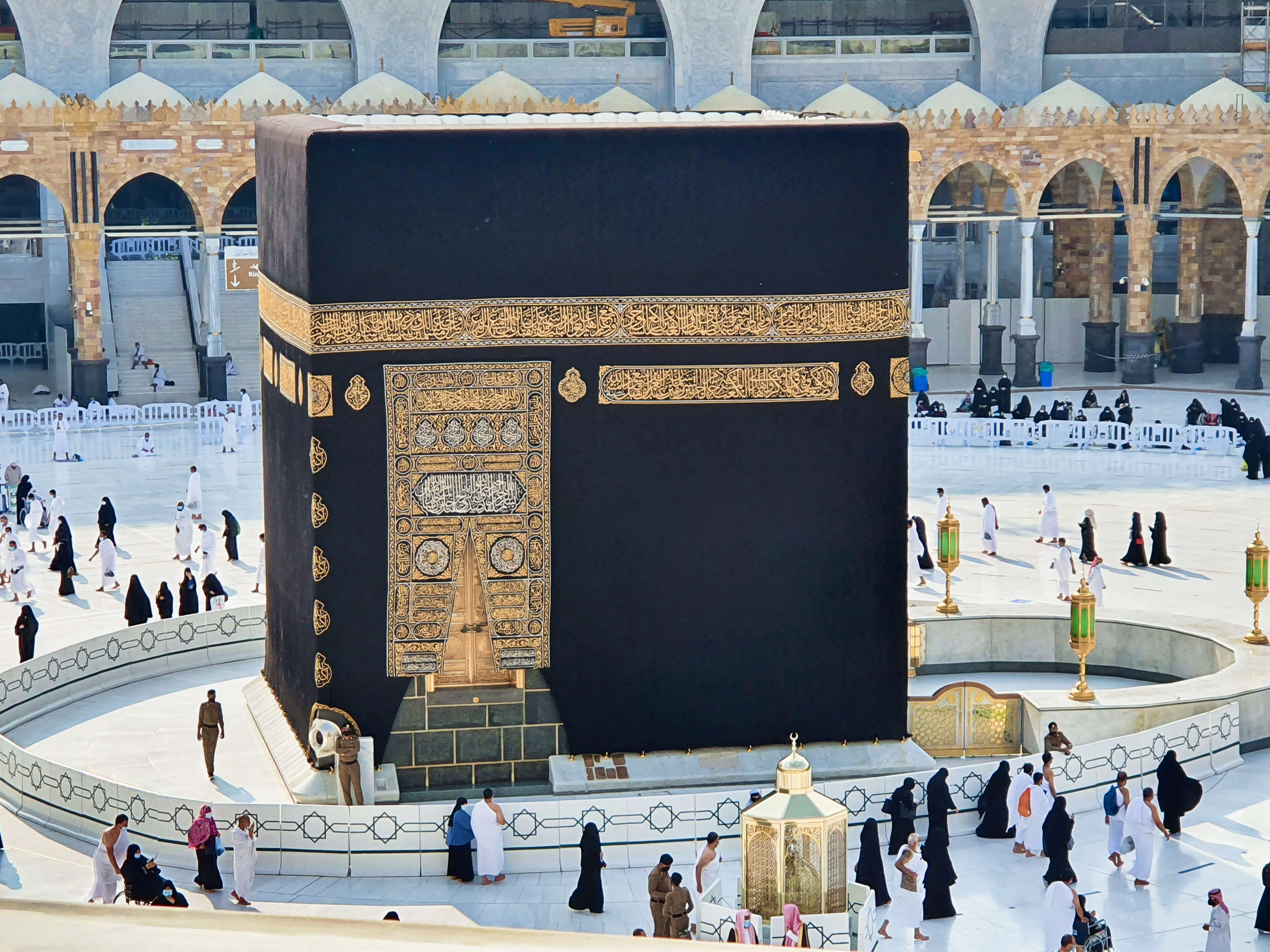
Islam emerged in the early 7th century CE in the Arabian Peninsula, beginning in the city of Mecca, in present-day Saudi Arabia. According to Islamic tradition, the Prophet Muhammad received the first revelations of the Quran in 610 CE. His teachings emphasized belief in one God, social justice, charity, moral responsibility, and equality among believers. In 622 CE, Muhammad and his followers migrated from Mecca to Medina in an event known as the Hijra, which marks the beginning of the Islamic calendar. By the time of Muhammad"s death in 632 CE, Islam had become the dominant religious and political force across much of the Arabian Peninsula.
The Kaaba Mecca 1880 historical photo
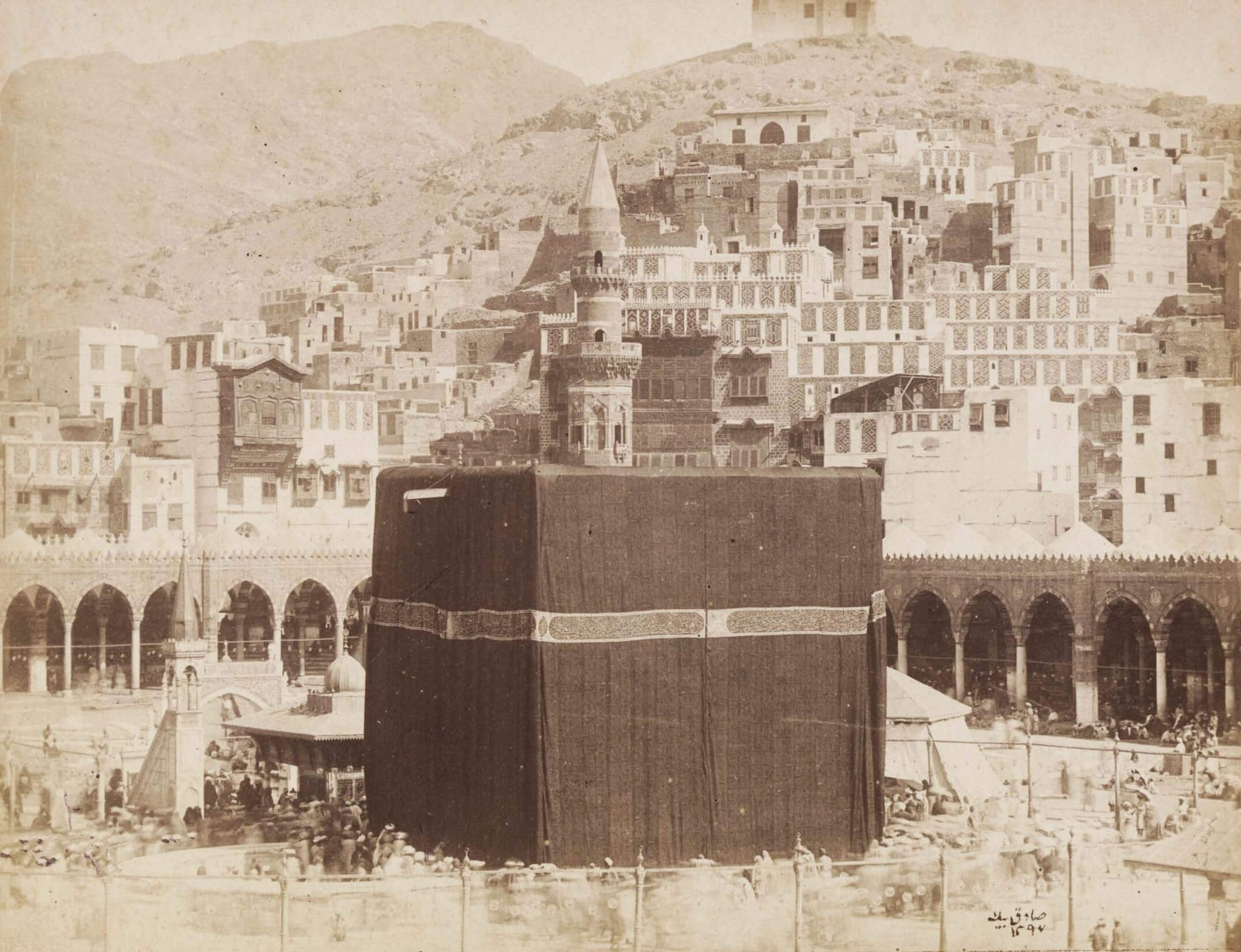
Following Muhammad"s death, Islam expanded rapidly under the Rashidun Caliphate (632–661 CE). Muslim armies moved beyond Arabia into territories controlled by the Byzantine and Sasanian Empires, bringing Syria, Palestine, Egypt, Iraq, and Persia under Muslim rule. Under the Umayyad Caliphate (661–750 CE), this expansion continued across North Africa, into the Iberian Peninsula, and eastward through Central Asia toward the Indian subcontinent. By the middle of the 8th century, the Islamic world stretched from Spain and Morocco in the west to Central Asia and parts of present-day Pakistan in the east.
Early Islamic Expansion Map
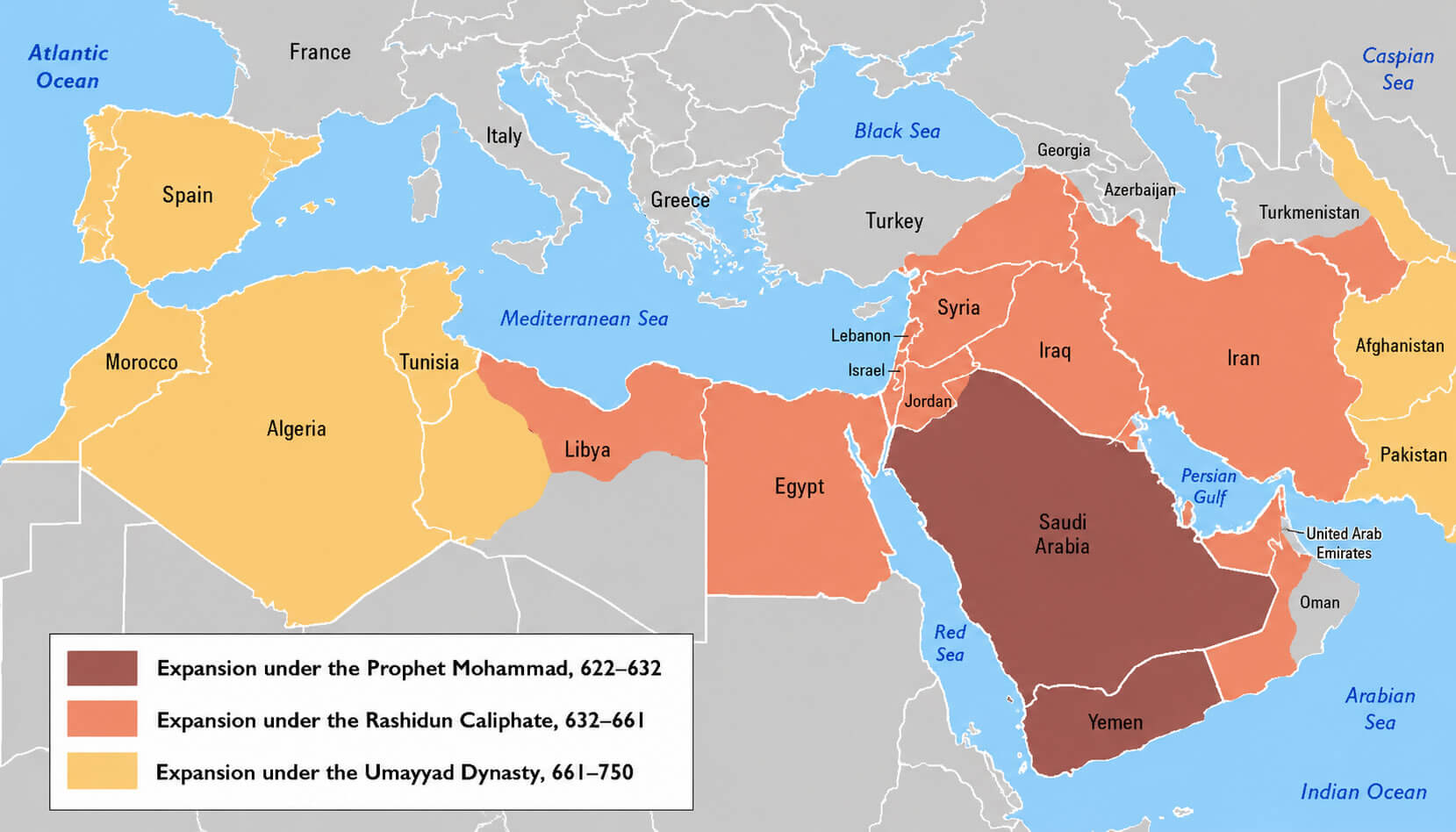
The spread of Islam, however, was not limited to military expansion. Over subsequent centuries, trade, migration, missionary activity, scholarship, and cultural exchange played major roles in introducing Islam to new regions. Muslim merchants carried their religion along the Silk Road, across the Indian Ocean, and through trans-Saharan trade networks. Islam gradually became established in Central Asia, South Asia, Southeast Asia, and sub-Saharan Africa. In countries such as Indonesia and Malaysia, its growth was especially connected with commerce and local conversion rather than large-scale Arab military conquest.
Kaaba Masjid Al Haram Mecca
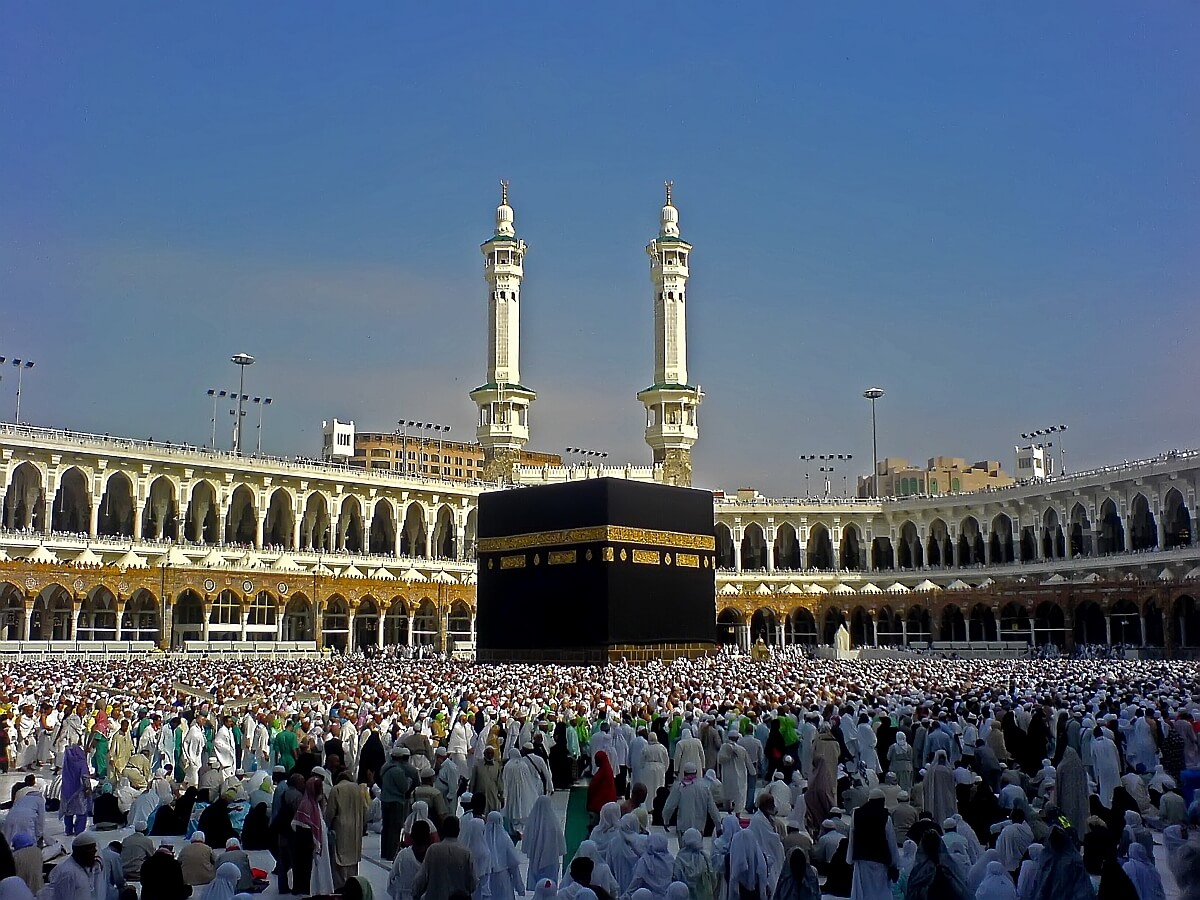
As Islamic civilization expanded, it had a profound influence on the societies within its sphere. Major centers such as Baghdad, Damascus, Cairo, Córdoba, Bukhara, and Samarkand became important centers of learning, commerce, science, and culture. Muslim scholars made significant contributions to mathematics, astronomy, medicine, geography, philosophy, architecture, and literature, while also translating and preserving works from Greek, Persian, Indian, and other intellectual traditions. Extensive commercial networks connected parts of Europe, Africa, the Middle East, Central Asia, South Asia, and Southeast Asia, encouraging the movement of goods, knowledge, technologies, and ideas.
Today, Islam is one of the world"s largest religions and has a particularly strong presence across North Africa, the Middle East, Central Asia, South Asia, and Southeast Asia. Muslim-majority countries extend from Morocco and Algeria across Egypt and the Arabian Peninsula to Iran, Iraq, Pakistan, Bangladesh, Malaysia, and Indonesia, while large Muslim communities also live in India, China, Russia, Europe, sub-Saharan Africa, and the Americas. The historical expansion of Islam therefore developed over many centuries through a combination of political expansion, trade, migration, cultural interaction, and religious conversion, creating a diverse global Muslim world that continues to influence societies across several continents.
Spread of Islam in Asia map from 632
Spread of Islam in Asia to 661 CE
Spread of Islam in Asia to 750 CE
Spread of Islam in Asia to 1500 CE
Distribution of Islam in West Asian countries map
Estimated Sunni Muslim distribution Middle East map
Global Shia Muslim population World map
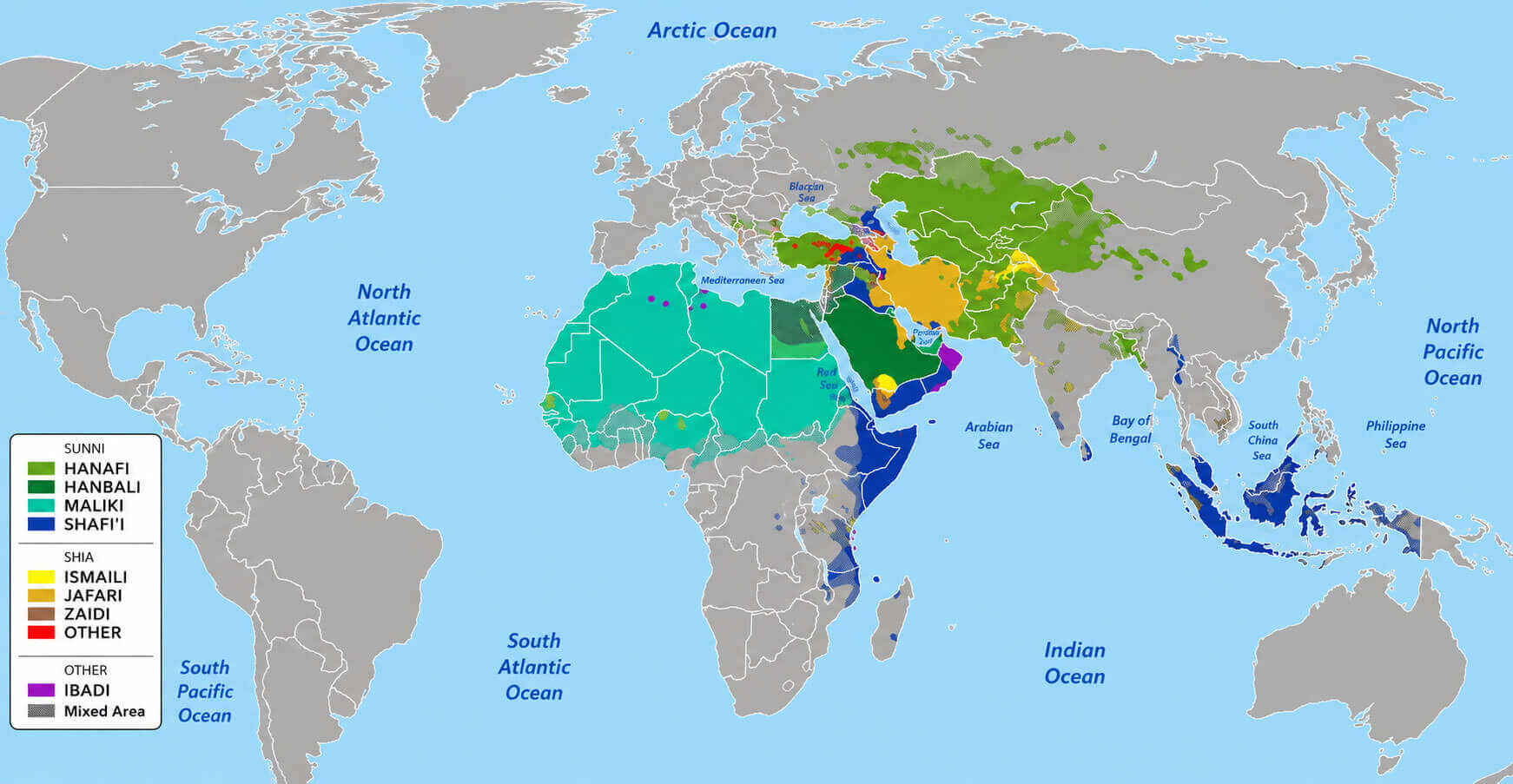
Islam in Africa population map
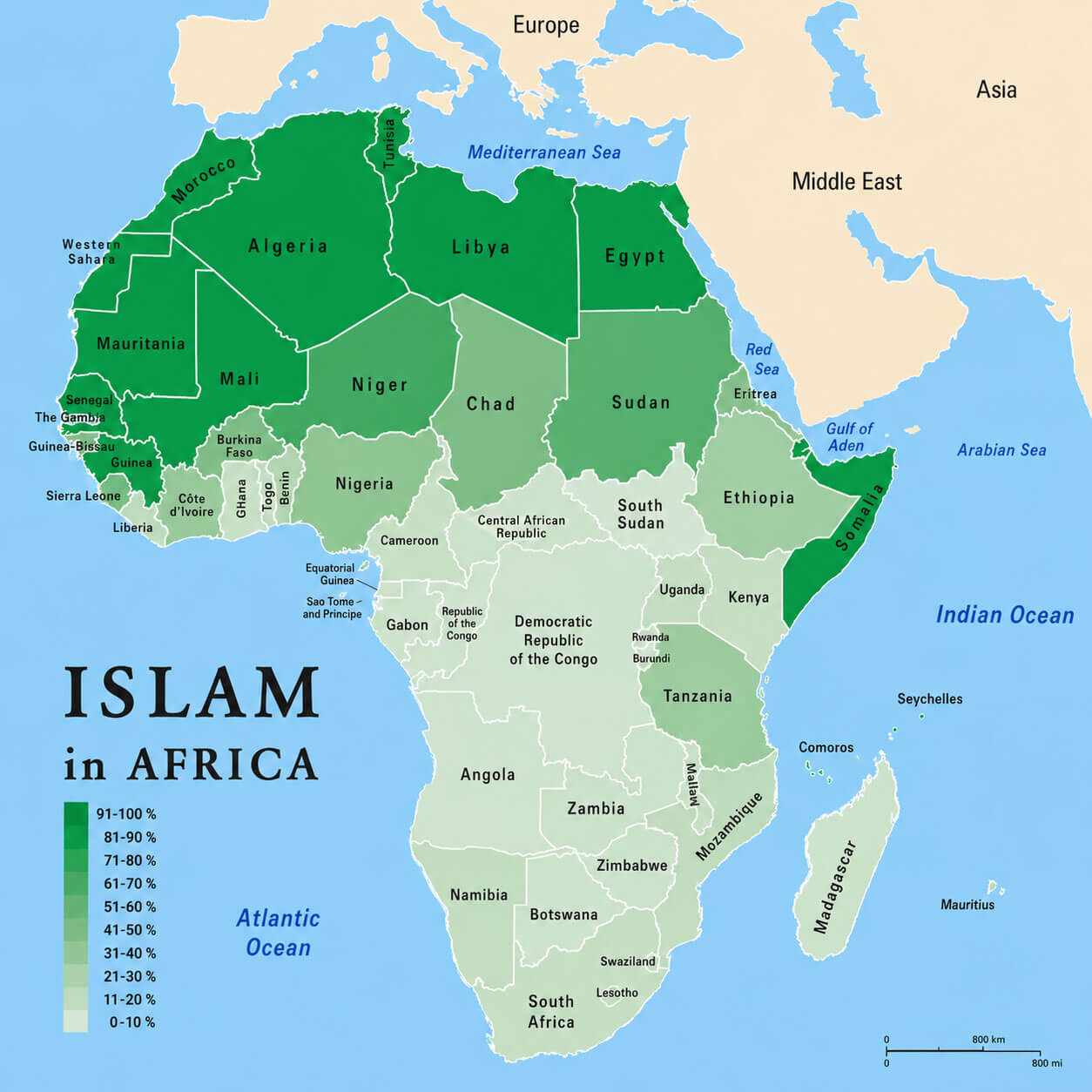
Islam Middle East countries map
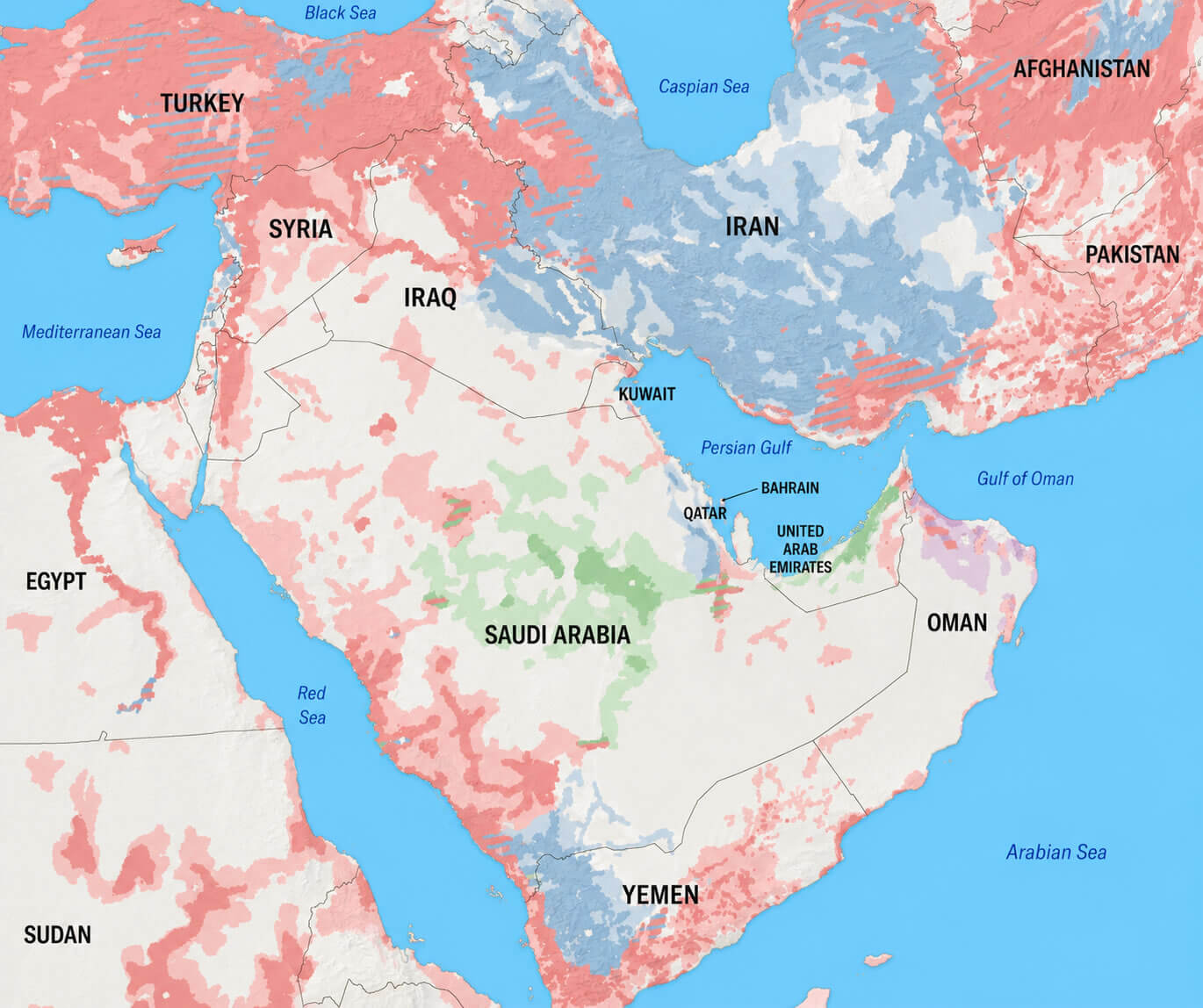
Muslim population distribution World map
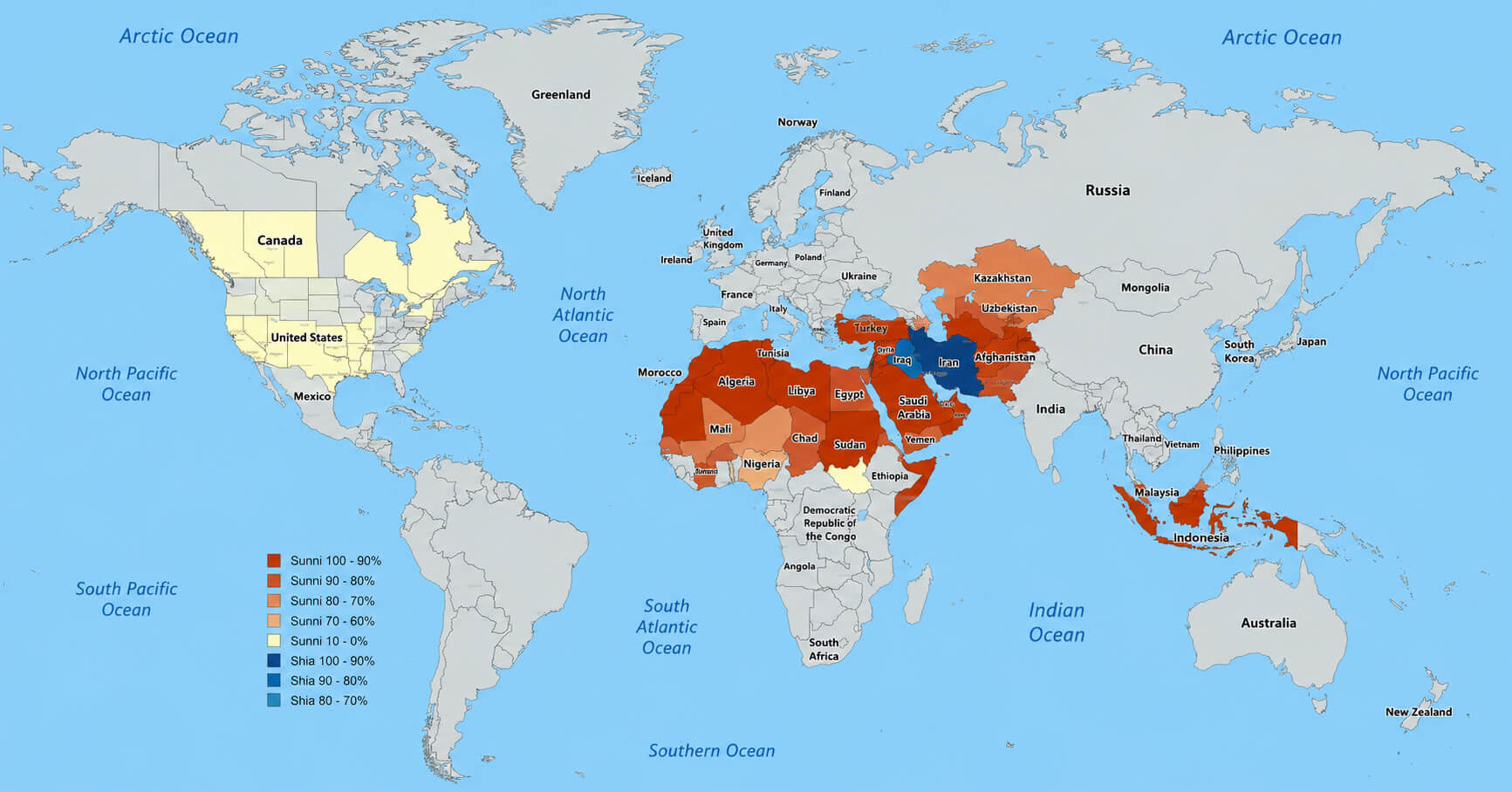
Shia population Middle East map
Sunni and Shia Muslim population map
World Muslim population by country map
World Muslim population distribution map
Feel free to explore these pages as well:
- World Map
- Map of the World
- More World Maps
- Map of World
- World Maps
- World Poltical Map
- World Languages Map
Copyright Turkey Travel Guide - 2005 - 2026. All rights reserved. Privacy Policy | Disclaimer